
October 27, 2026
Hard, alkaline water for Malawi cichlids: how to get it and keep it
What pH, KH and GH mean, how to test your tap water, and how to give mbuna and peacocks the stable water they need, without miracle chemicals.
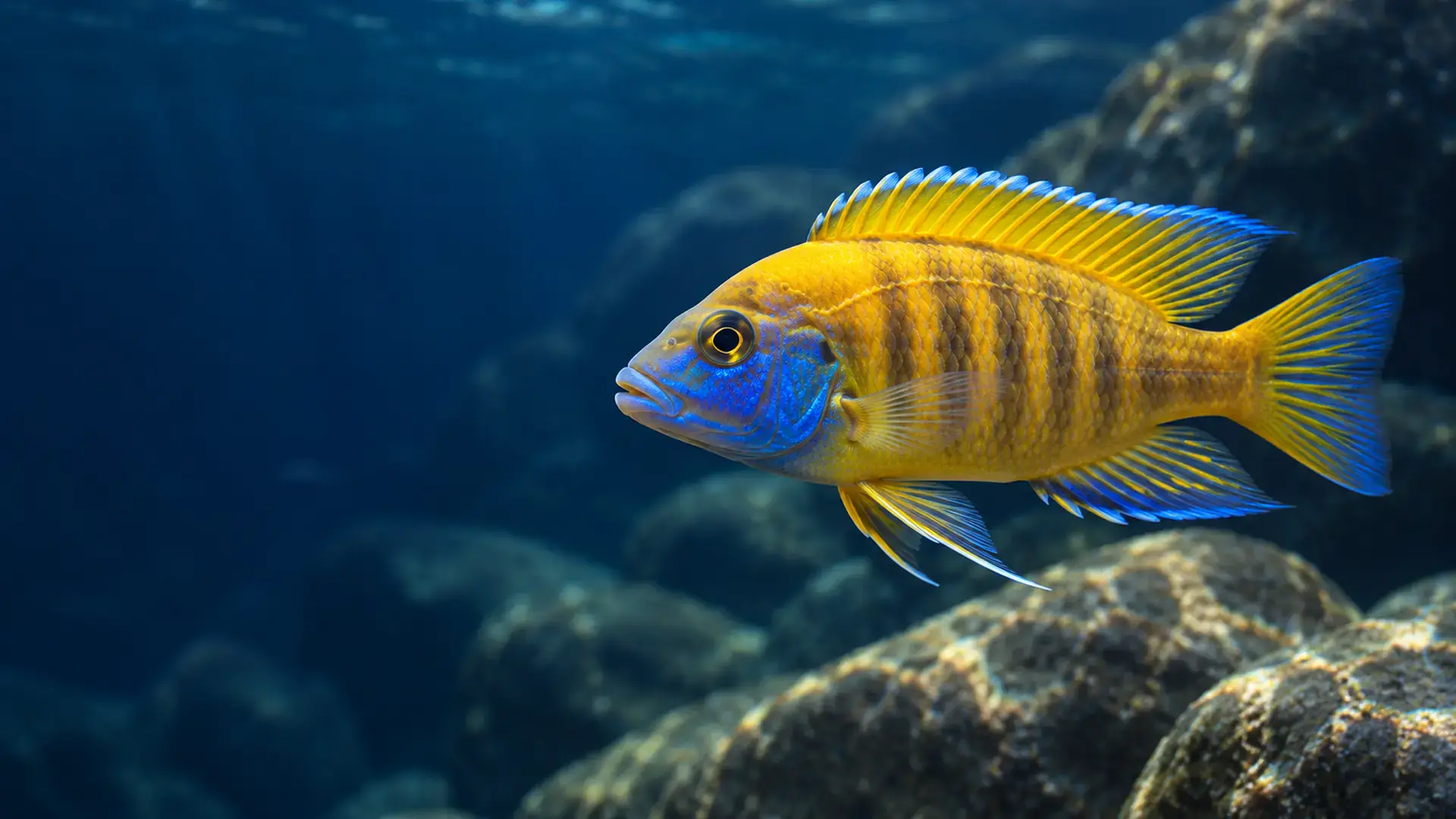
Lake Malawi has hard, alkaline water, very different from the soft water of a tropical community tank. Its cichlids, from a Red Zebra to a Benga peacock, do best when the aquarium resembles that environment and, above all, when the water doesn't change suddenly.
Three numbers worth knowing
- pH: how acidic or alkaline the water is. For Malawi cichlids, keepers usually aim for roughly 7.8 to 8.6.
- KH (carbonate hardness): the water's ability to hold the pH steady. With low KH, pH can drop without warning.
- GH (general hardness): the amount of dissolved minerals such as calcium and magnesium.
Of the three, KH does the most for stability. A "perfect" pH that swings every week stresses fish more than a value slightly out of range that stays put.
Test your water first
Tap water varies by area and season, so there is no single recipe. Before adding anything:
- Test the pH, KH and GH of your tap water with liquid test kits, which are usually more reliable than strips.
- Let a glass of that water sit for 24 hours and test the pH again. It sometimes shifts as gases escape.
- Write the results down with the date. My aquarium keeps that log and shows it on any device.
How to raise and stabilize hardness
If your water comes out soft, there are gradual ways to add carbonates and minerals:
- Calcium carbonate substrate or decor: aragonite sand or crushed coral, in the tank or the filter, releases carbonates slowly.
- African lake salts: sold in aquarium shops and dosed by volume. Always follow the manufacturer's instructions.
- Baking soda (sodium bicarbonate): raises KH but adds no calcium or magnesium. If you use it, use small measured doses, always in the new water before it goes in.
Whatever the method, prepare the new water to match the tank before every change. That way a water change doesn't become a chemistry change.
Rocks: decorative, but not neutral
Limestone helps keep the water hard; other rocks can leach unwanted substances. Before using a rock you collected, scrub it and test it: a few drops of vinegar that fizz mean carbonates. Avoid rocks with metallic veins or of unknown origin.
In short
- Test before you correct, and record the results.
- Aim for steady KH rather than chasing an exact pH.
- Change water weekly, always prepared to the same values.
Got your readings? Share them in the forum (in Spanish; English posts welcome). Every part of the country has its own water story, and we learn faster together.
Discuss it in the forumMy aquarium
More from the blog
 November 2, 2026
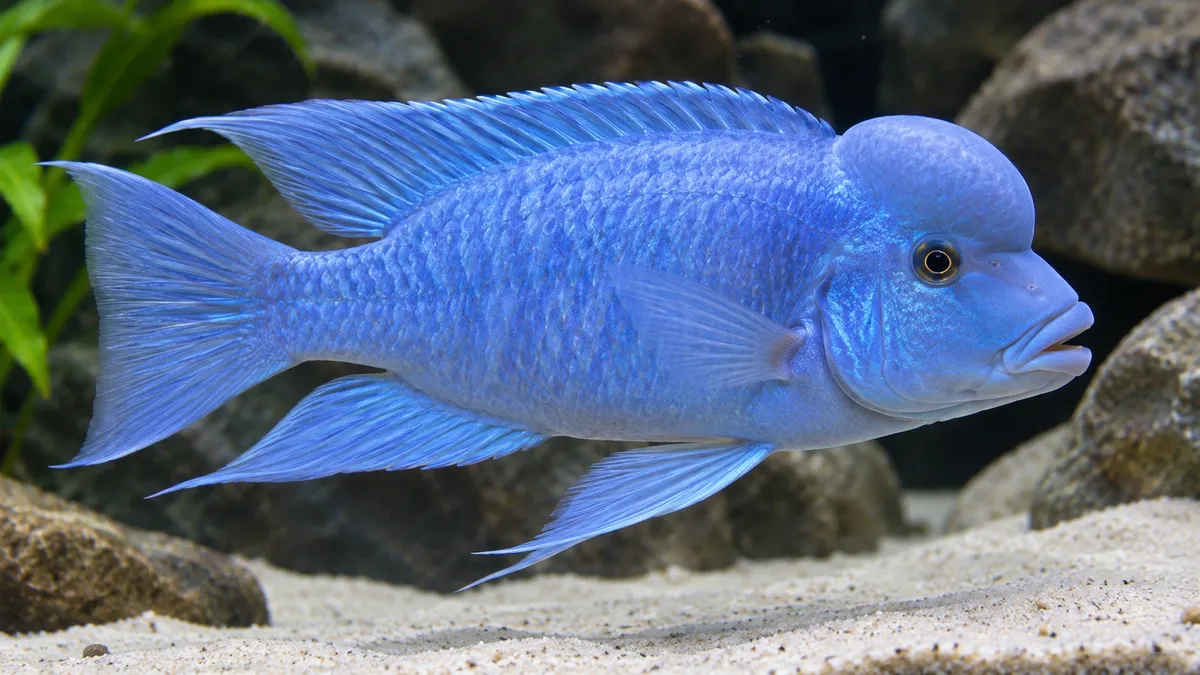
Blue Dolphin (Cyrtocara moorii): care, hump and calm temperament
Lake Malawi's humped blue cichlid: how big it gets, what tank and food it needs, how to sex it and why it is one of the most peaceful large cichlids.
Read →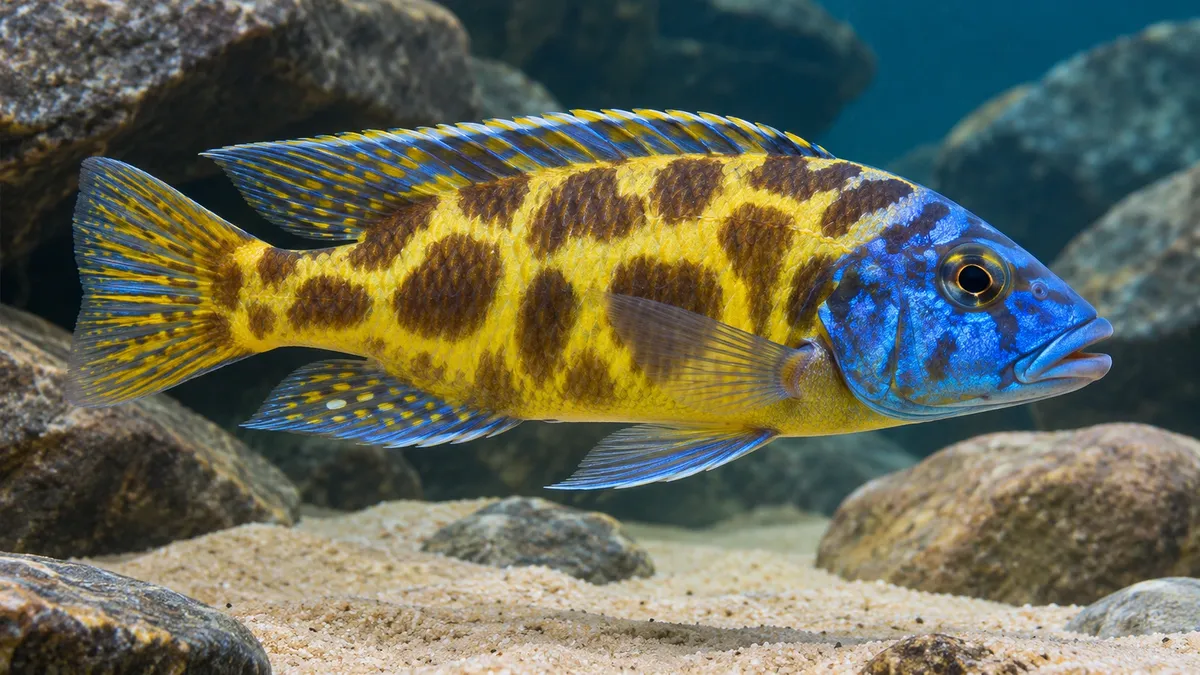 November 2, 2026
Venustus (Nimbochromis venustus): care, size and tank mates
Lake Malawi's giraffe cichlid: how big it gets, what tank it needs, what it eats, how to tell male from female and which fish can live with it without being eaten.
Read →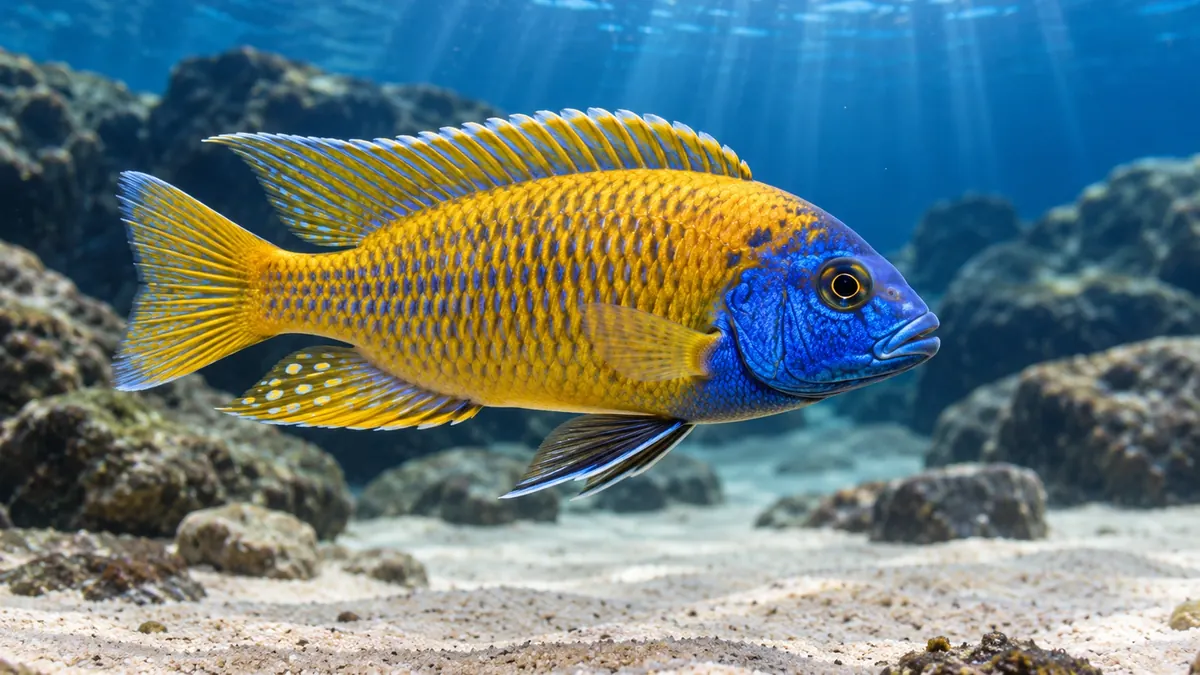 November 1, 2026
Benga peacock (Aulonocara baenschi): care, colors and tank mates
The yellow peacock with a blue face: size, tank, diet, male and female differences, and how to build a calm peacock tank.
Read →