
November 2, 2026
Blue Dolphin (Cyrtocara moorii): care, hump and calm temperament
Lake Malawi's humped blue cichlid: how big it gets, what tank and food it needs, how to sex it and why it is one of the most peaceful large cichlids.
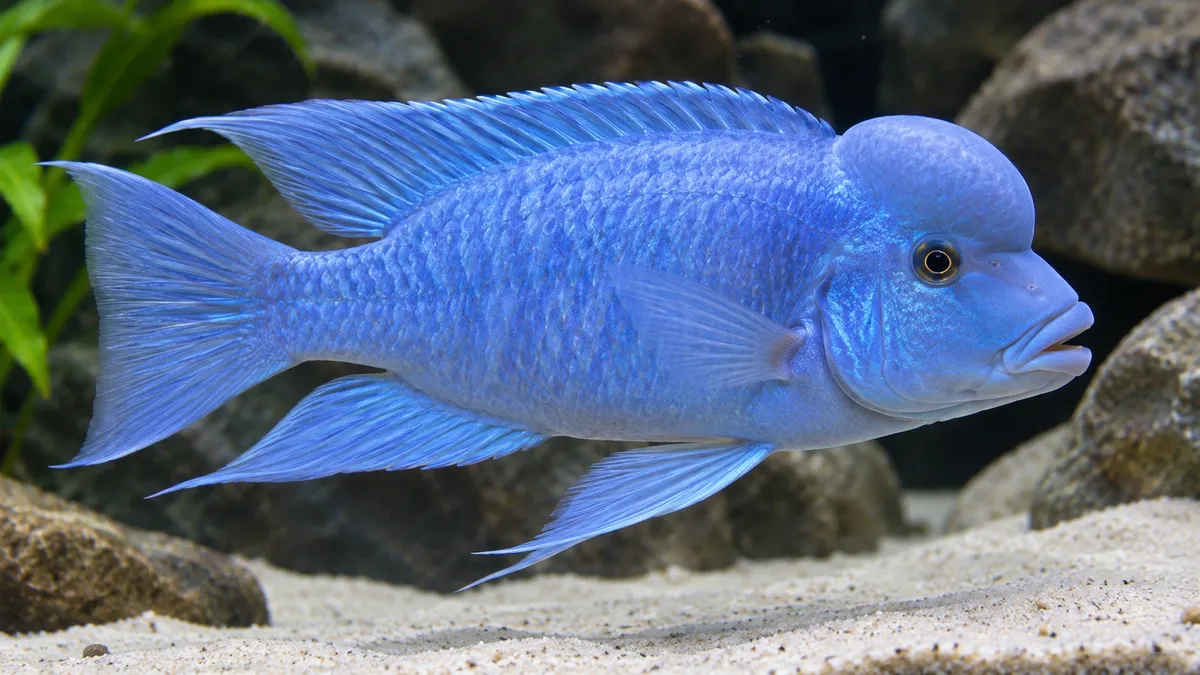
The Blue Dolphin (Cyrtocara moorii) is easy to recognize: a sky-blue body and a rounded hump on the forehead that looks like a dolphin's. It is one of the calmest large cichlids from Lake Malawi, ideal if you want big fish without mbuna aggression. This guide covers what it needs to look its best.
Quick facts
| Scientific name | Cyrtocara moorii |
|---|---|
| Group | Haplochromine (not mbuna), Lake Malawi |
| Adult size | 20 to 25 cm |
| Temperament | Peaceful; somewhat territorial only when breeding |
| Minimum tank | 350 liters, 150 cm long |
| Water | pH 7.8 to 8.6, hard; 24 to 27 °C |
| Diet | Omnivore: sinking pellets, little animal protein |
| Breeding | Maternal mouthbrooder |
The hump and the color
The hump (nuchal hump) appears in both males and females and grows with age; adult males usually have a bigger one. The blue deepens as the fish matures and feels at ease: a pale Blue Dolphin is usually stressed or housed with tank mates that are too aggressive.
Sexing it by eye is hard. Adult males are a little bigger, with longer fins and a brighter blue, especially when courting. In juveniles there is hardly any difference.
Tank
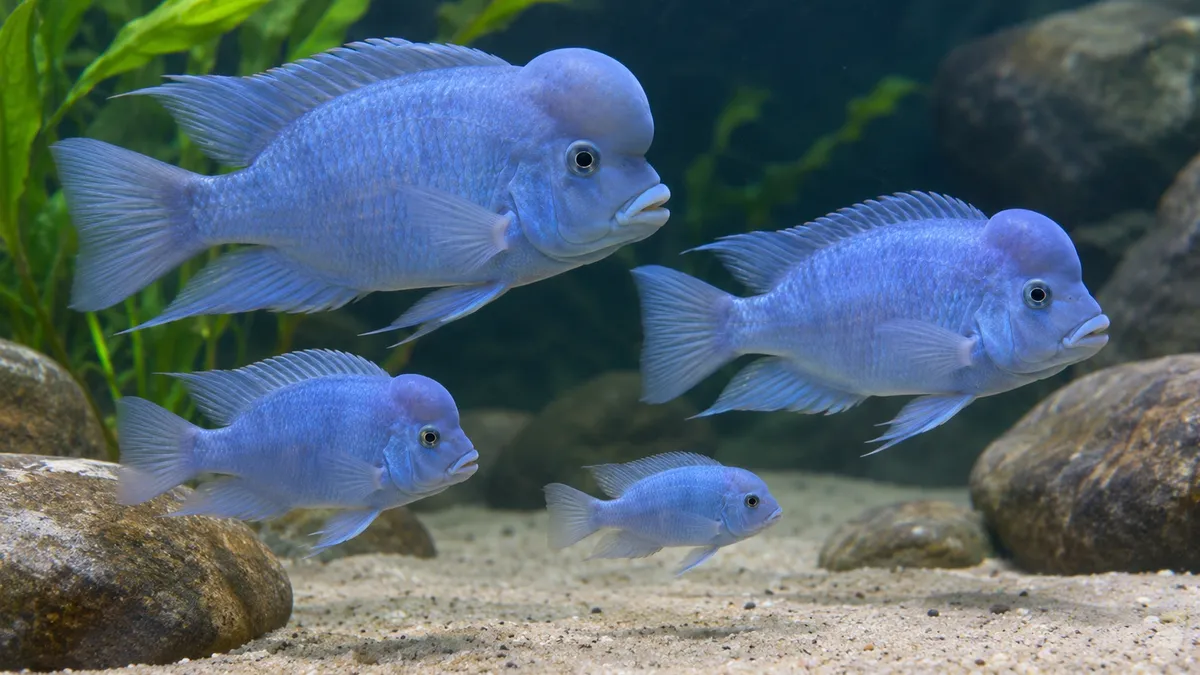
- Space: at least 350 liters and 150 cm for a small group. It grows to 25 cm and swims in open water.
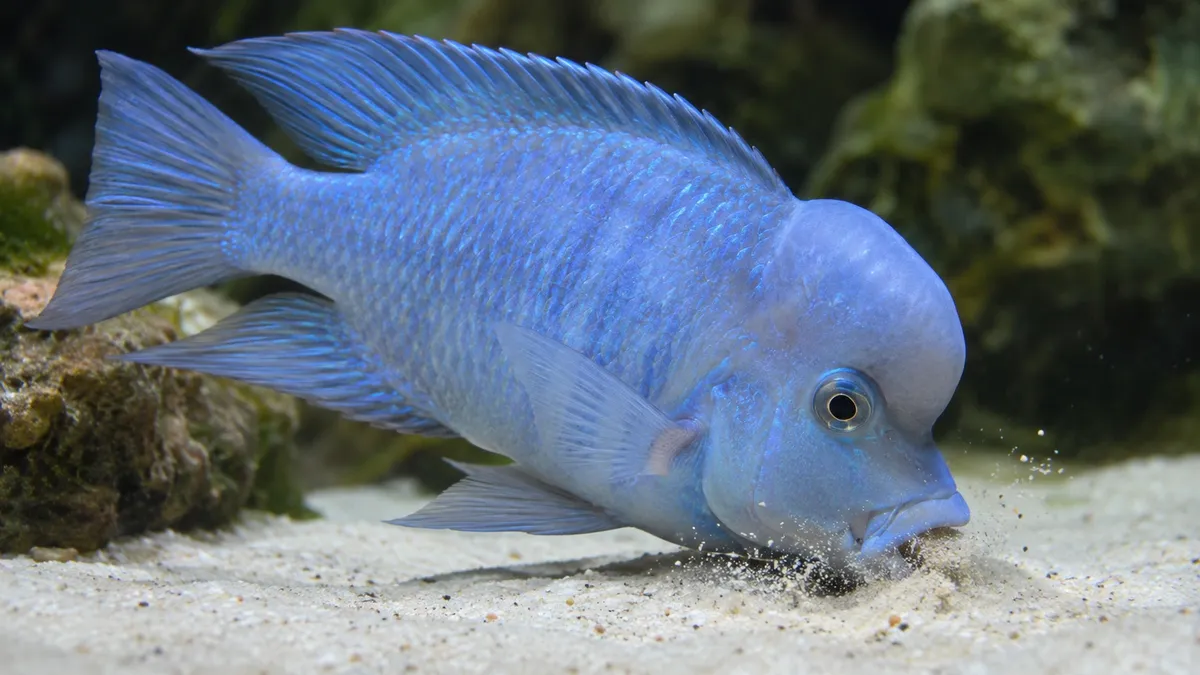
- Fine sand: it likes to sift through it for food.
- A few large rocks, well supported, leaving the middle open.
- Hard, alkaline water and a good filter. We explain how to prepare it in Costa Rica tap water.
More on setup in tank size and stocking.
Diet
In the lake it follows sand-digging fish and eats what they uncover. In the aquarium, feed quality sinking pellets with spirulina and little animal protein, once or twice a day. A couple of times a week you can add krill or brine shrimp. Too much protein and overfeeding can cause Malawi bloat.
Tank mates
- Good: peacocks (Aulonocara) such as the Saffron, crosses like the Red Empress × Rubin Red and other calm haplochromines.
- With care: the Venustus and the Polystigma are predators: only with Blue Dolphins of the same size.
- Avoid: aggressive mbuna such as the Chipokae or the Auratus. They harass it and it loses its color.
- Group: one male with several females, or a group of 4 to 6 if you do not know the sexes.
More combinations in compatible African cichlids and mbuna vs. peacock cichlids.
Breeding
The male cleans a flat stone or a pit in the sand and courts the female in his brightest blue. She holds the eggs in her mouth for about three weeks. It is one of the easiest large cichlids to breed in a calm tank. More in how to breed African cichlids.
Blue Dolphin in Costa Rica
We have a Blue Dolphin for sale. The profile has real photos, price and availability, and you can order online or make us an offer.
Discuss it in the forumMy aquarium
More from the blog
 November 2, 2026
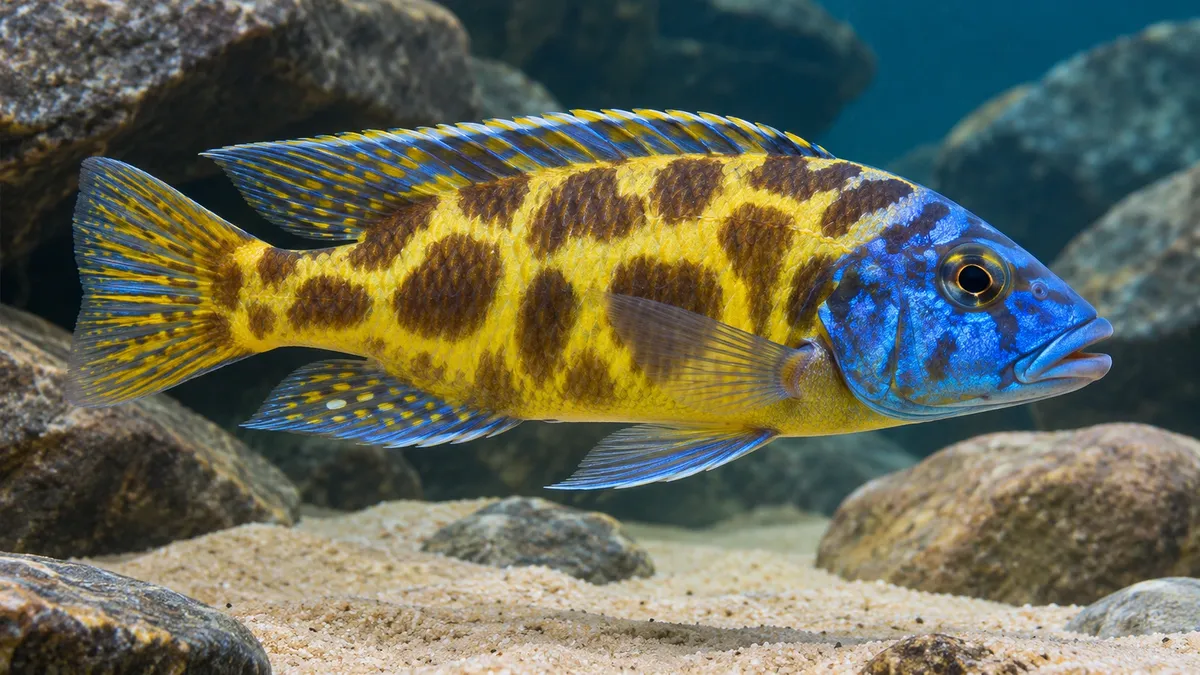
Venustus (Nimbochromis venustus): care, size and tank mates
Lake Malawi's giraffe cichlid: how big it gets, what tank it needs, what it eats, how to tell male from female and which fish can live with it without being eaten.
Read →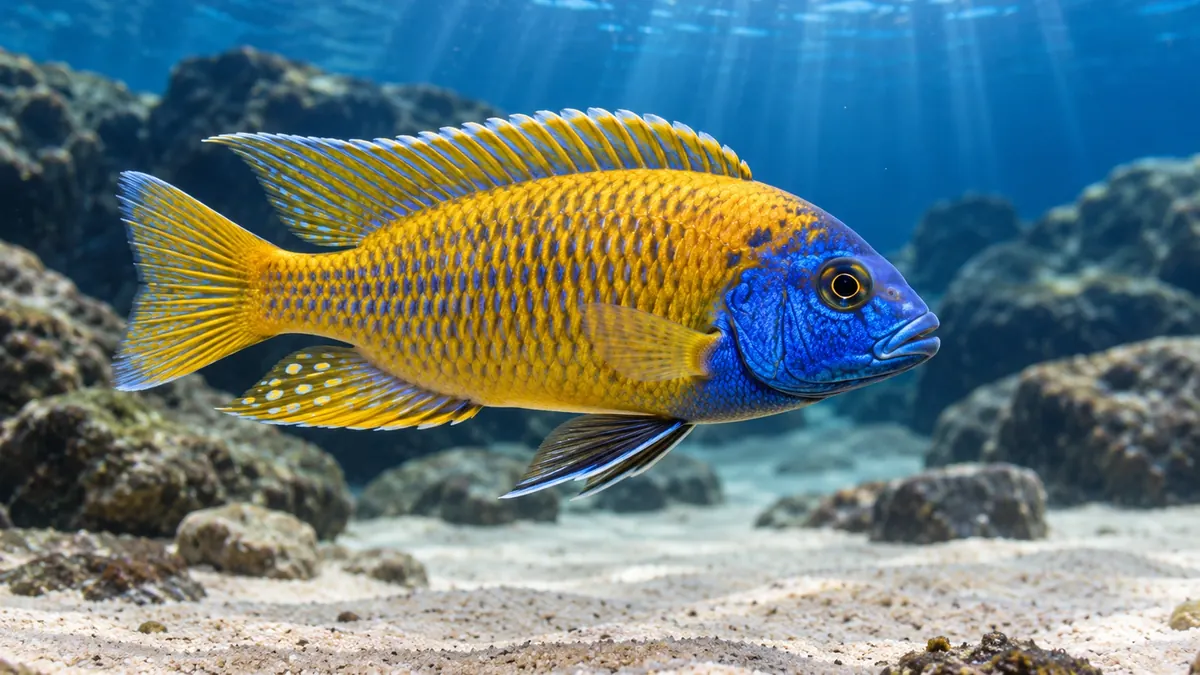 November 1, 2026
Benga peacock (Aulonocara baenschi): care, colors and tank mates
The yellow peacock with a blue face: size, tank, diet, male and female differences, and how to build a calm peacock tank.
Read → November 1, 2026
Chipokae (Melanochromis chipokae): care and how to handle its temperament
One of the most beautiful and most aggressive mbuna: male and female colors, tank, diet, sex ratio and which fish it can live with.
Read →