
October 29, 2026
African cichlid tank setup: size, rocks and how many fish
What size tank African cichlids need, how to set up the rocks and sand, which filter to use and how many fish fit without fights.
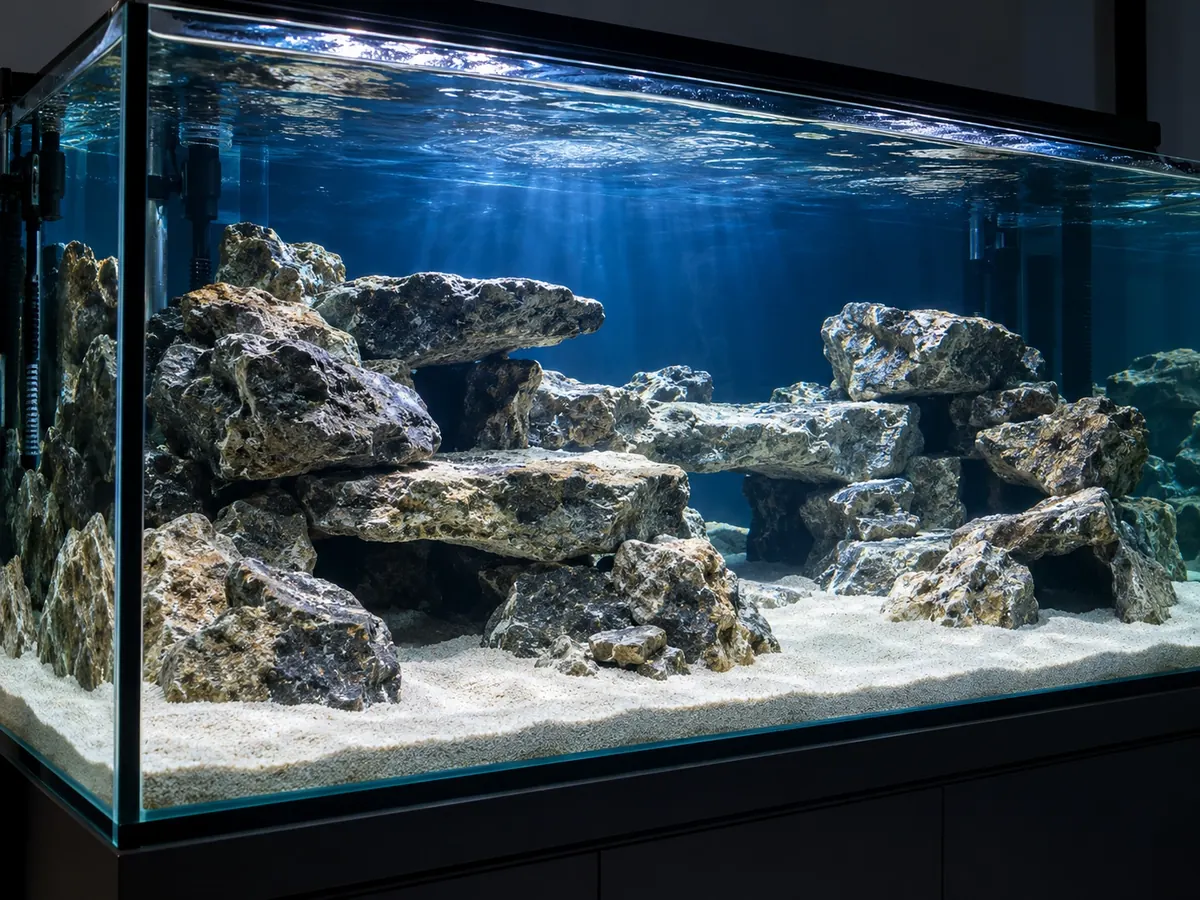
The tank is the most important decision when you start with African cichlids. A good setup reduces fighting, keeps the water stable and shows off their colors. A makeshift one ends in hiding fish, torn fins and cloudy water. This guide helps you plan it before you buy the first fish.
Size: length matters more than height
Mbuna defend territories along the bottom, so the length of the tank counts most, not its height. As a guide:
| Tank | Approximate size | Good for |
|---|---|---|
| Under 150 L | under 90 cm long | Not recommended for mbuna |
| 200 L | 100 × 40 × 50 cm | A group of small mbuna, 1 or 2 species |
| 300 L | 120 × 50 × 50 cm | A mixed group of 3 or 4 species |
| 450 L or more | 150 cm or longer | Peacocks and larger haps, or big groups |
A bigger tank is not just for more fish: a larger volume of water changes more slowly, which makes everything easier to maintain.
Rocks: caves and borders
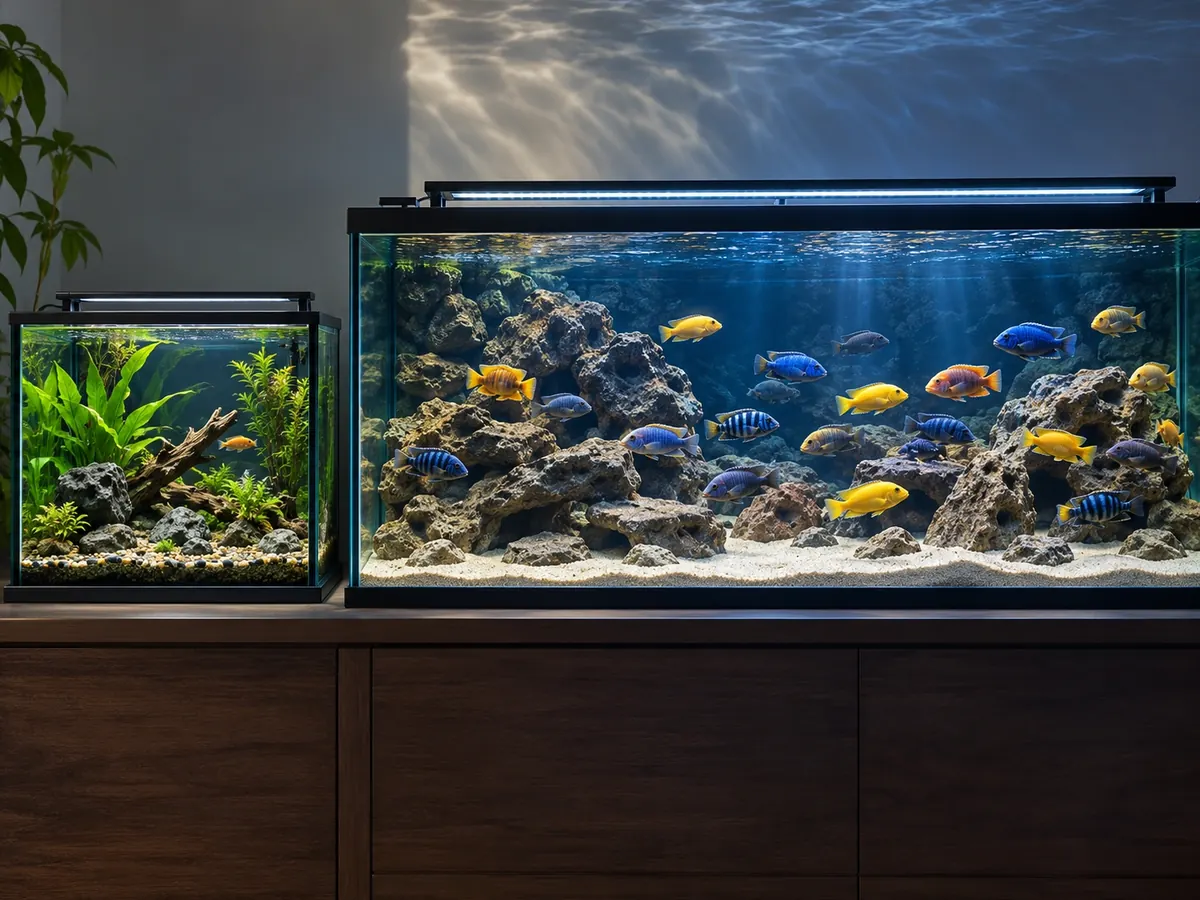
In Lake Malawi, mbuna live among piles of rocks, and in the tank the rocks do the same job: they give hiding places and mark borders between territories.
- Stack the rocks securely, resting directly on the bottom glass, not on the sand. Cichlids dig, and a poorly supported pile can fall and crack the glass.
- Build several caves of different sizes, more than you think you need.
- Leave open space at the front so the fish can swim and be seen.
- Use rocks that release nothing into the water; limestone or lava rock work well. Avoid rocks with metallic veins.
Sand and water
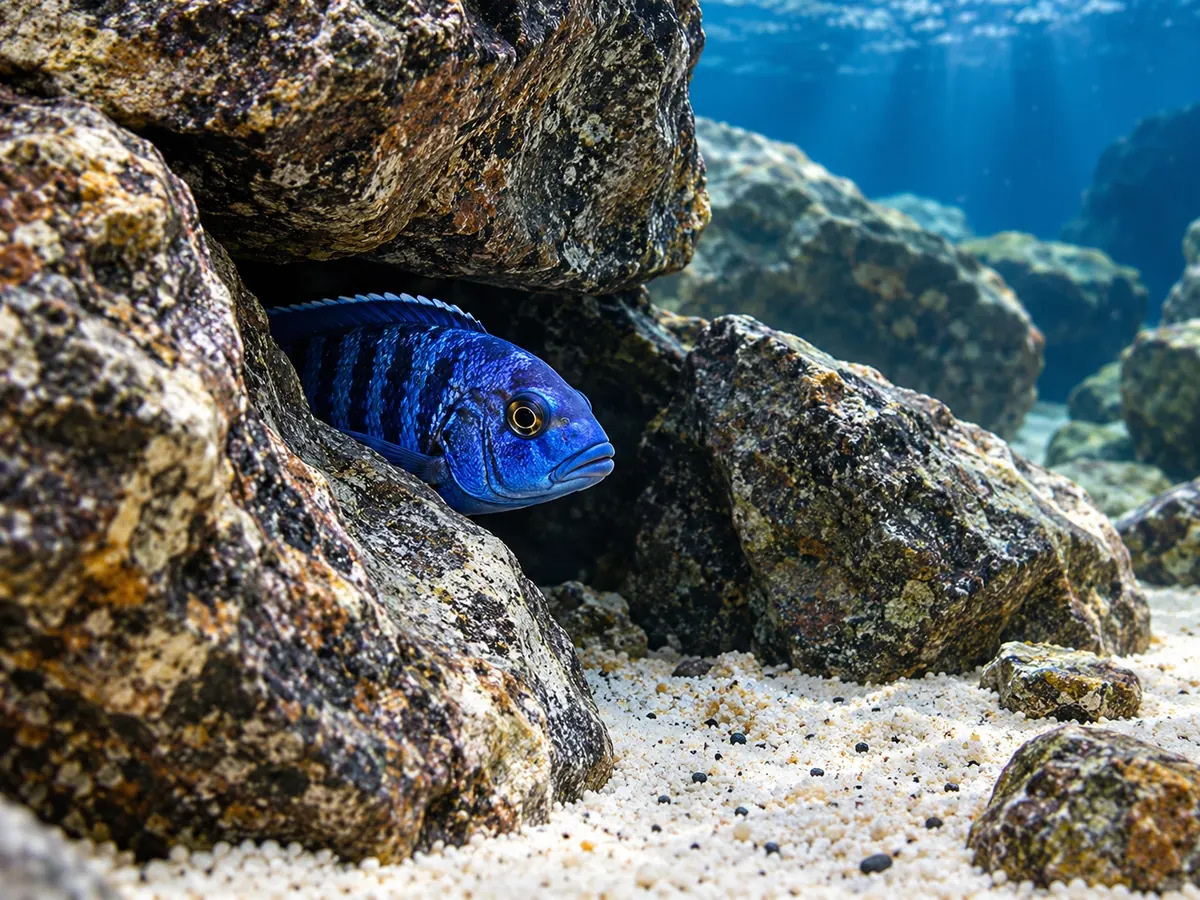
The best choice is aragonite sand or crushed coral: it is light-colored, the fish love digging in it, and it slowly releases carbonates that help keep the water hard and the pH stable, between 7.8 and 8.6. Keep the temperature between 24 and 27 °C. If your tap water is soft, hard water for Malawi cichlids explains how to harden it without sudden swings.
Filter and lighting
African cichlids eat a lot and produce plenty of waste, so choose a filter that moves 4 to 6 times the tank volume per hour. A canister filter or two hang-on-back filters are good options for 200 L or more. Change 20 to 30% of the water every week.
The light does not need to be strong, since plants are not required. An LED light for 8 to 10 hours a day brings out the colors, and a little algae on the rocks is welcome: mbuna eat it.
How many fish
With mbuna, "few fish so they feel comfortable" does not work. A lightly stocked tank ends with the dominant fish always chasing the same victim. What works is a well-planned group:
- For 200 L: about 12 to 15 small mbuna of 1 or 2 species, with one male for every 3 or 4 females.
- For 300 L: 18 to 25 mbuna of 3 or 4 differently colored species.
- Peacocks: need more room per fish, since they grow larger and swim in open water. In 300 L, a group of 8 to 10 is reasonable.
More fish means more work for the water: if you stock heavily, the filter and weekly water changes are not optional. And add fish in groups, never one at a time, after a quarantine.
Before you buy the fish
With the tank set up, the last step before fish is cycling it: letting the filter grow the bacteria that break down waste. It takes 3 to 6 weeks, and it is the best investment in a healthy home for your fish.
When it is ready, our catalog lists the species available with prices and care profiles. If you are starting out, the Electric Yellow and the Red Zebra are good first choices, and our beginner's guide explains how to combine them. Questions about your setup? Share them in the forum or keep a log of your tank in My aquarium.
Discuss it in the forumMy aquarium
More from the blog
 November 2, 2026
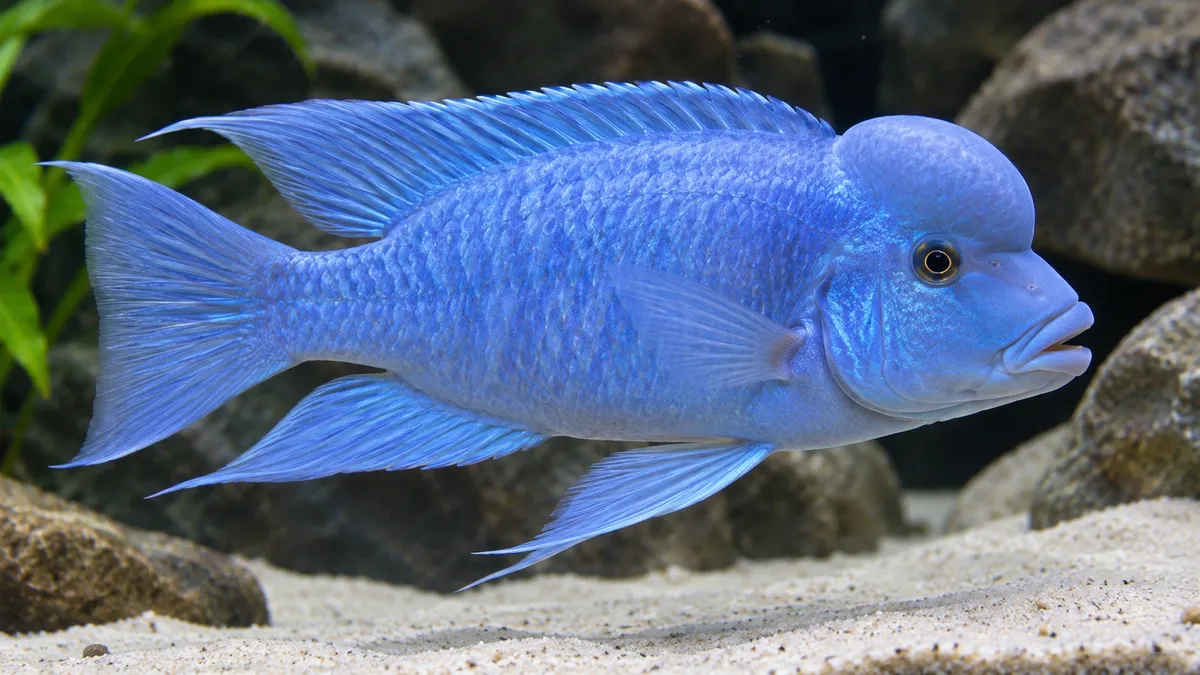
Blue Dolphin (Cyrtocara moorii): care, hump and calm temperament
Lake Malawi's humped blue cichlid: how big it gets, what tank and food it needs, how to sex it and why it is one of the most peaceful large cichlids.
Read →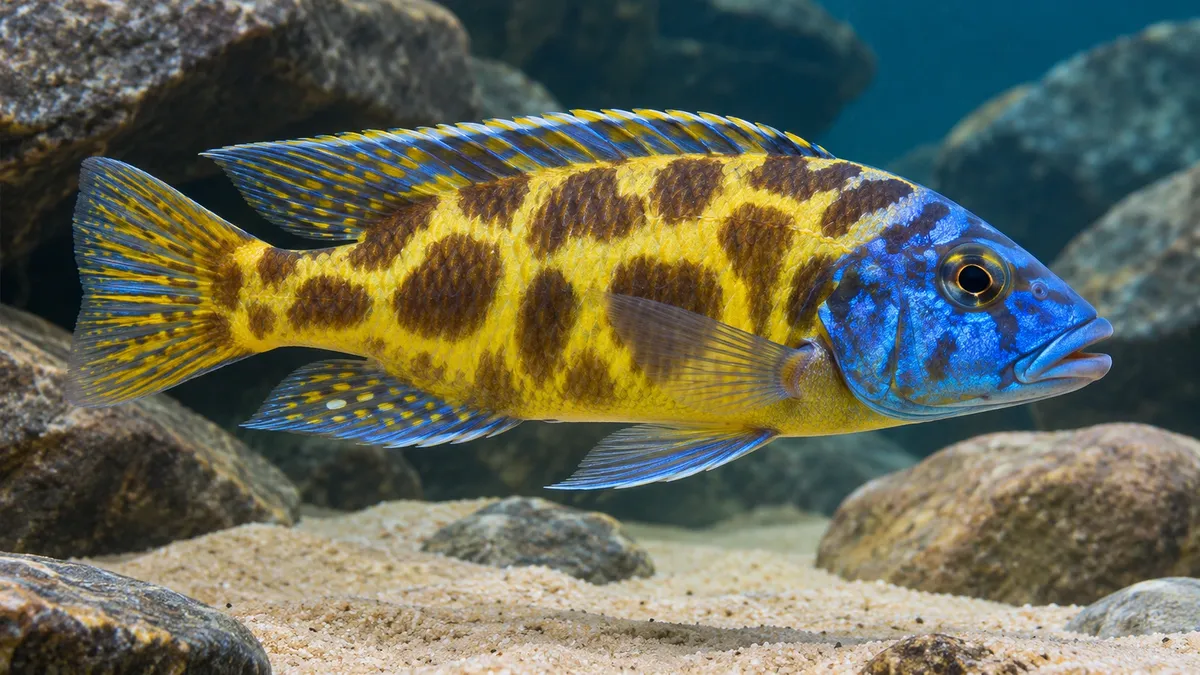 November 2, 2026
Venustus (Nimbochromis venustus): care, size and tank mates
Lake Malawi's giraffe cichlid: how big it gets, what tank it needs, what it eats, how to tell male from female and which fish can live with it without being eaten.
Read →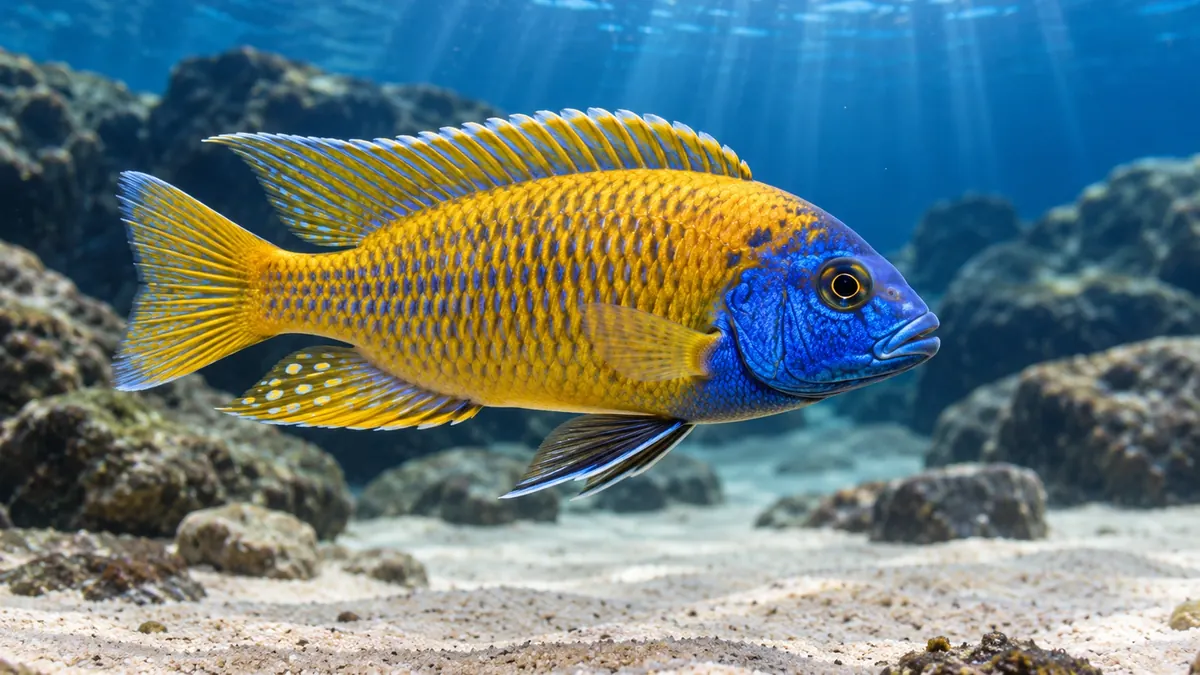 November 1, 2026
Benga peacock (Aulonocara baenschi): care, colors and tank mates
The yellow peacock with a blue face: size, tank, diet, male and female differences, and how to build a calm peacock tank.
Read →