
October 29, 2026
African cichlids in Costa Rica: a beginner's guide
What African cichlids are, how mbuna and peacocks differ, what tank they need and how to choose your first fish in Costa Rica.
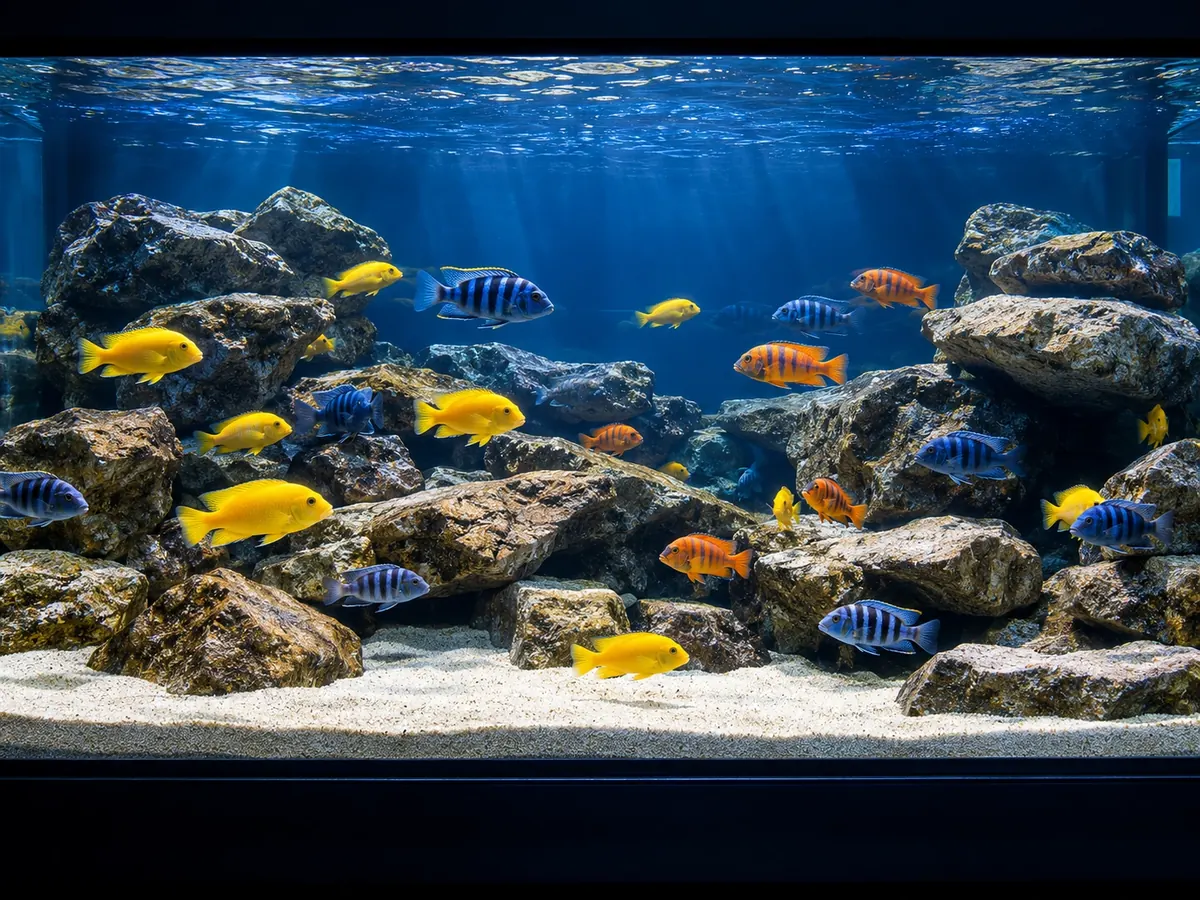
African cichlids are some of the most colorful freshwater fish in the world: electric blues, bright yellows and oranges that look like they belong on a reef, in a freshwater tank. If you are thinking about keeping your first cichlids in Costa Rica, this guide covers the basics before you buy: what they are, the main types, the tank they need and how to choose well.
What are African cichlids?
They are fish of the cichlid family from the great lakes of East Africa. The most popular in aquariums come from Lake Malawi, a huge lake with hard, alkaline water, rocky shores and sandy bottoms. Hundreds of species evolved there, many found nowhere else.
Color is only part of the appeal. They are smart, active fish with a lot of personality: they recognize whoever feeds them, defend their territory and show fascinating courtship and breeding behavior. Many species are mouthbrooders: the female carries the eggs and fry in her mouth.
The two big groups: mbuna and peacocks
Almost every African cichlid you will find in a shop belongs to one of these two groups:
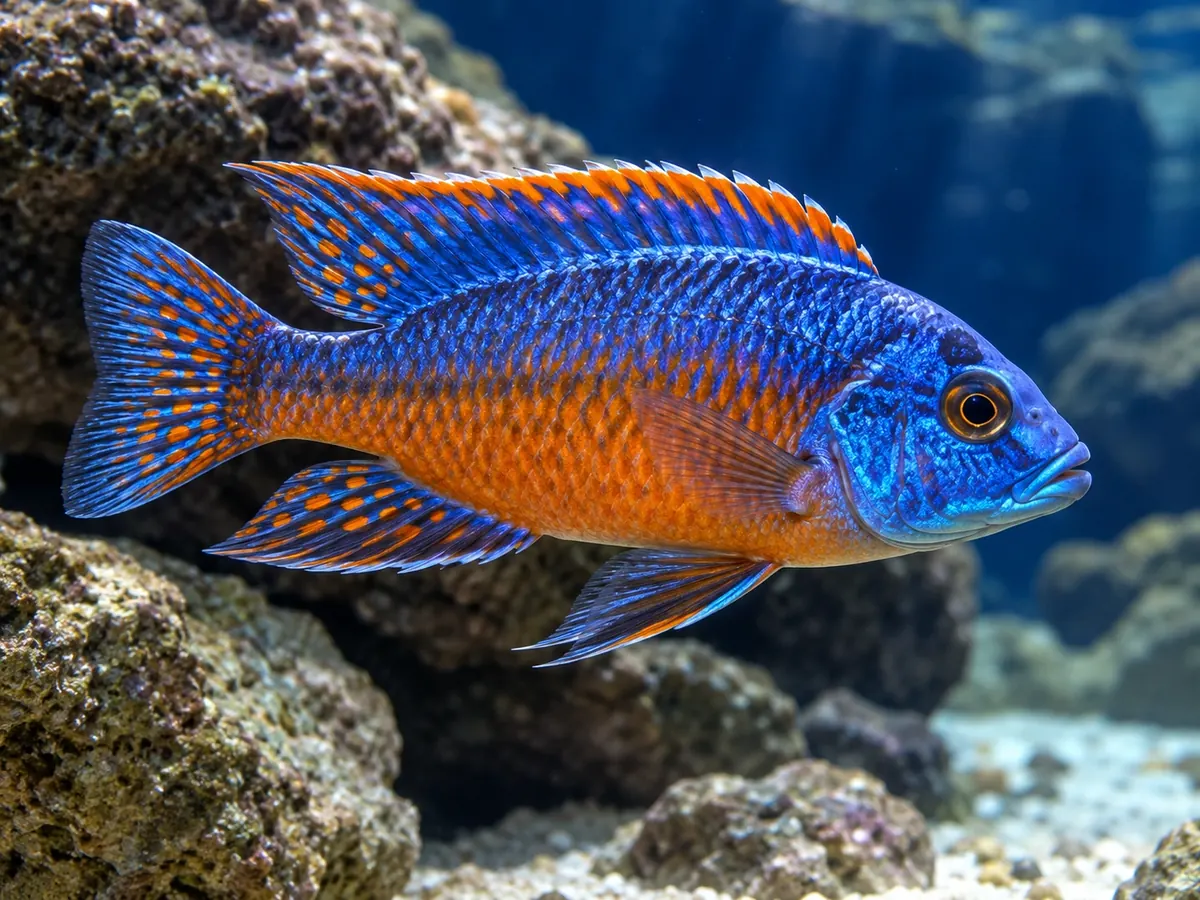
- Mbuna: they live close to the rocks and eat mostly algae. Very active, territorial and brightly colored. Examples: the Red Zebra, the Electric Yellow, the Chipokae and the Auratus.
- Peacocks (Aulonocara) and haps: they swim more in open water and over the sand, hunting small invertebrates. Usually calmer, and the males are stunning. Example: the Benga peacock.
They can be mixed with care, but mbuna tend to be more aggressive and take over the food. If you are starting out, the simplest approach is to pick one group and build the tank around it. Our guide to mbuna and peacocks covers the differences in more detail.
What tank they need
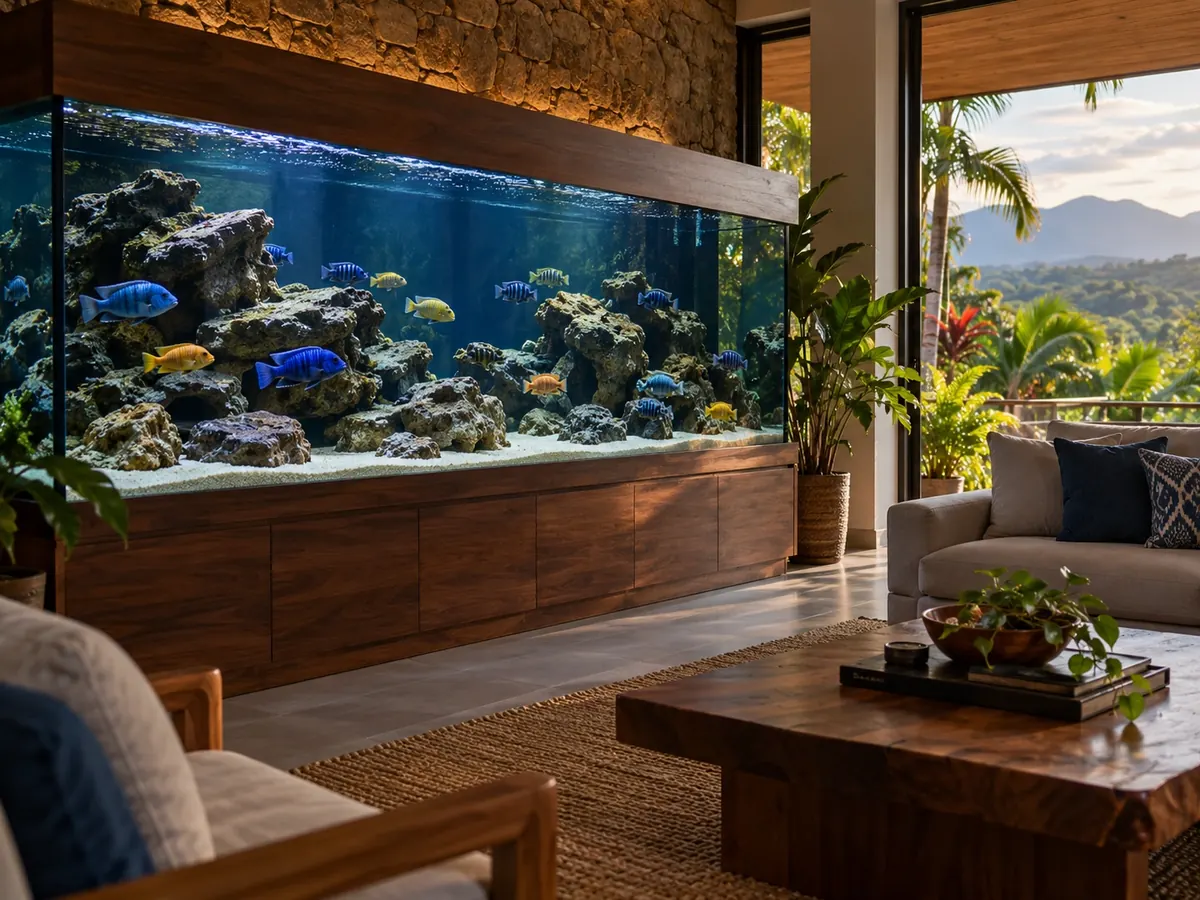
African cichlids are not fish for a small bowl. A reasonable minimum for a group of mbuna is about 200 liters, and longer is better: length gives each fish room for its own territory.
- Stacked rocks that form caves and hiding places. They help spread out aggression.
- Sand, ideally aragonite or crushed coral, which also helps keep the water hard.
- A good filter, because these fish eat well and make a mess.
- Hard, alkaline water, with a pH of 7.8 to 8.6. See hard water for Malawi cichlids for how to get there.
Before adding any fish, the tank must be cycled: the filter needs bacteria that break down waste. We explain how in cycling the tank.
How many fish, and how to combine them
Mbuna surprise most beginners: a larger group usually gets along better than a small one. With few fish, the dominant one keeps chasing the same victim; with more fish, aggression is spread out. Some rules that work:
- Keep one male with several females of each species.
- Avoid mixing species with very similar colors and patterns: the males see each other as rivals.
- Add fish in groups rather than one at a time, so nobody arrives in a territory that is already taken.
- Do not mix African cichlids with peaceful tropical fish such as guppies, tetras or angelfish.
Choosing your first cichlids
To start, choose hardy species that are easy to find. The Electric Yellow is one of the calmest mbuna and a classic for beginners. The Red Zebra brings orange color and lots of activity. If you prefer a calmer tank, peacocks such as the Benga peacock are a great option.
When buying, look for fish that swim actively, eat well and have intact fins. Juveniles cost less and let you watch them grow into their adult colors. And always quarantine and acclimate new fish before moving them to the main tank.
African cichlids in Costa Rica
Our catalog lists the fish we have available, with prices, real photos and a care profile for each species. You can pay by SINPE, card or arrange it on WhatsApp, and pick up or send an Uber Flash. If you have questions before setting up your tank, write to us or ask in the community forum: that is what it is for.
Discuss it in the forumMy aquarium
More from the blog
 November 2, 2026
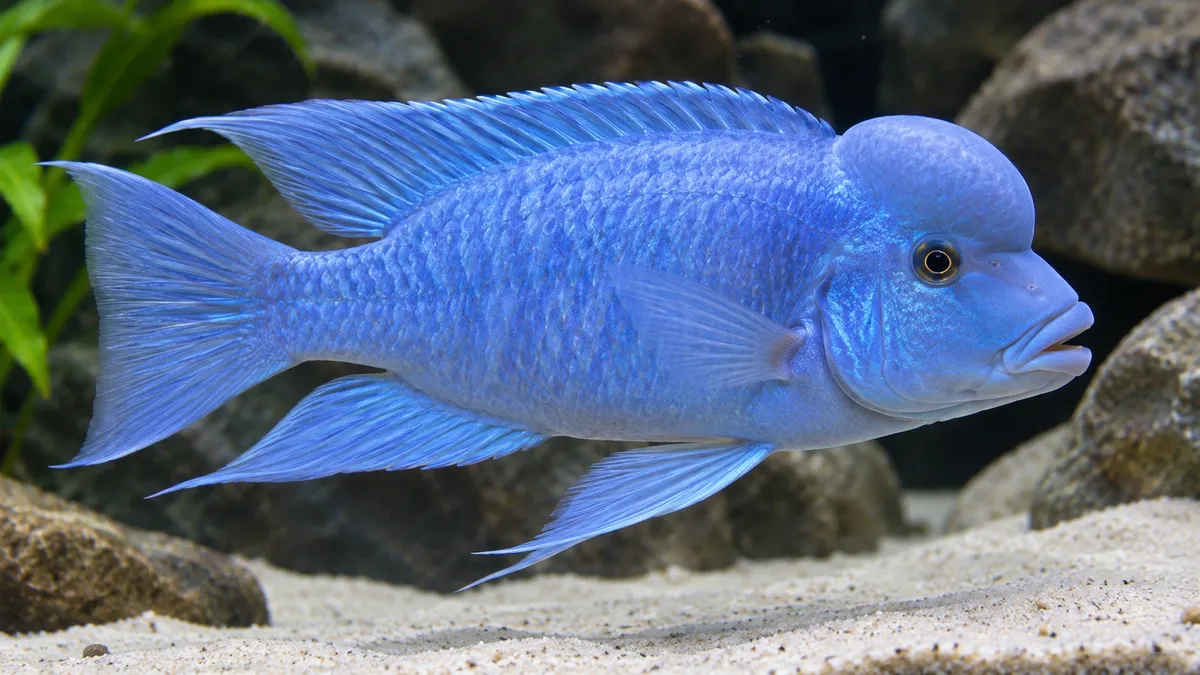
Blue Dolphin (Cyrtocara moorii): care, hump and calm temperament
Lake Malawi's humped blue cichlid: how big it gets, what tank and food it needs, how to sex it and why it is one of the most peaceful large cichlids.
Read →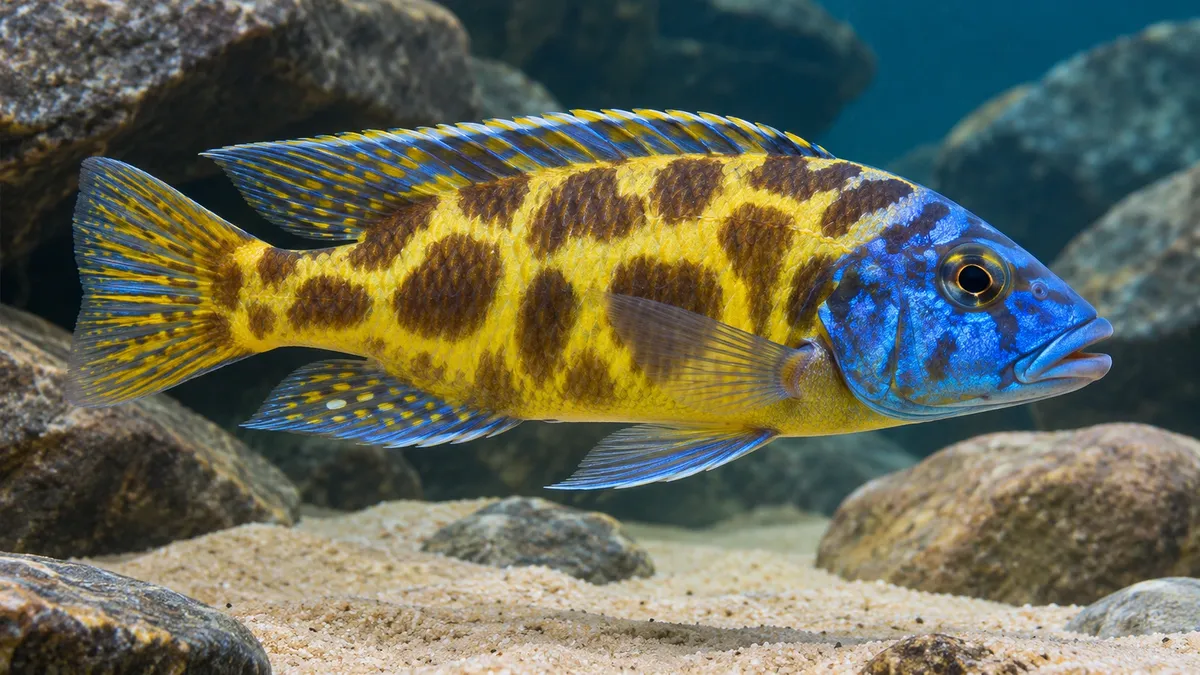 November 2, 2026
Venustus (Nimbochromis venustus): care, size and tank mates
Lake Malawi's giraffe cichlid: how big it gets, what tank it needs, what it eats, how to tell male from female and which fish can live with it without being eaten.
Read →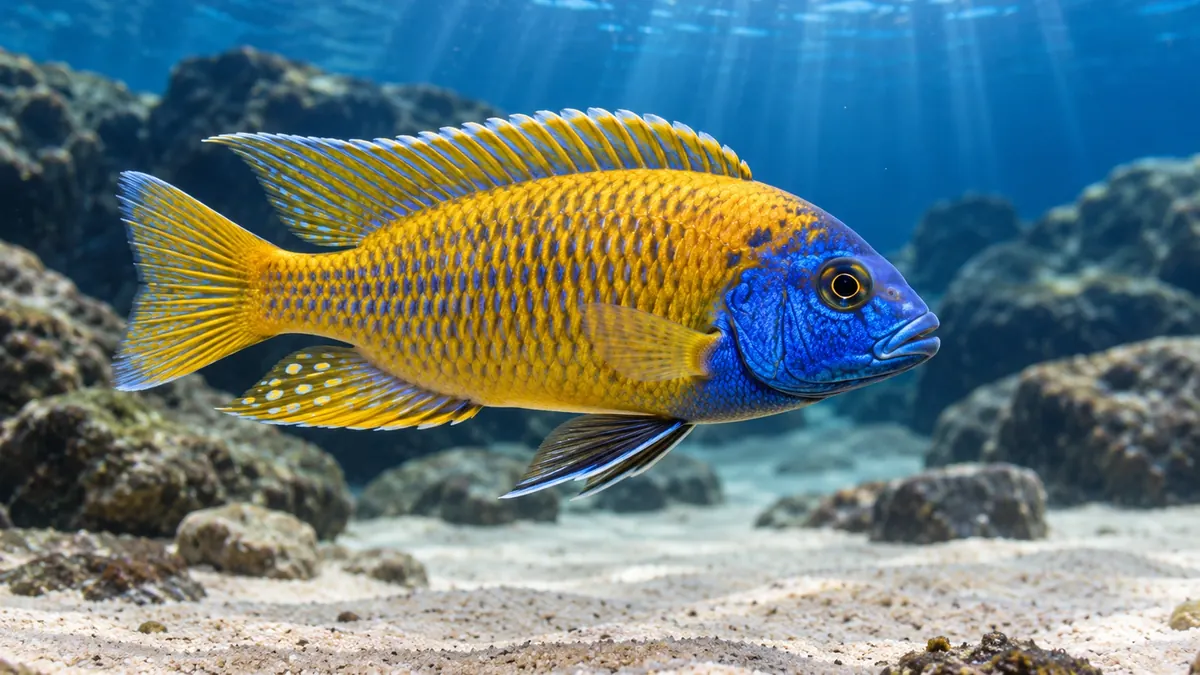 November 1, 2026
Benga peacock (Aulonocara baenschi): care, colors and tank mates
The yellow peacock with a blue face: size, tank, diet, male and female differences, and how to build a calm peacock tank.
Read →