
October 30, 2026
Compatible African cichlids: which fish to mix and which to avoid
Rules for combining African cichlids without fights: mbuna with mbuna, peacocks apart, different colors, sex ratios and which other fish can live with them.
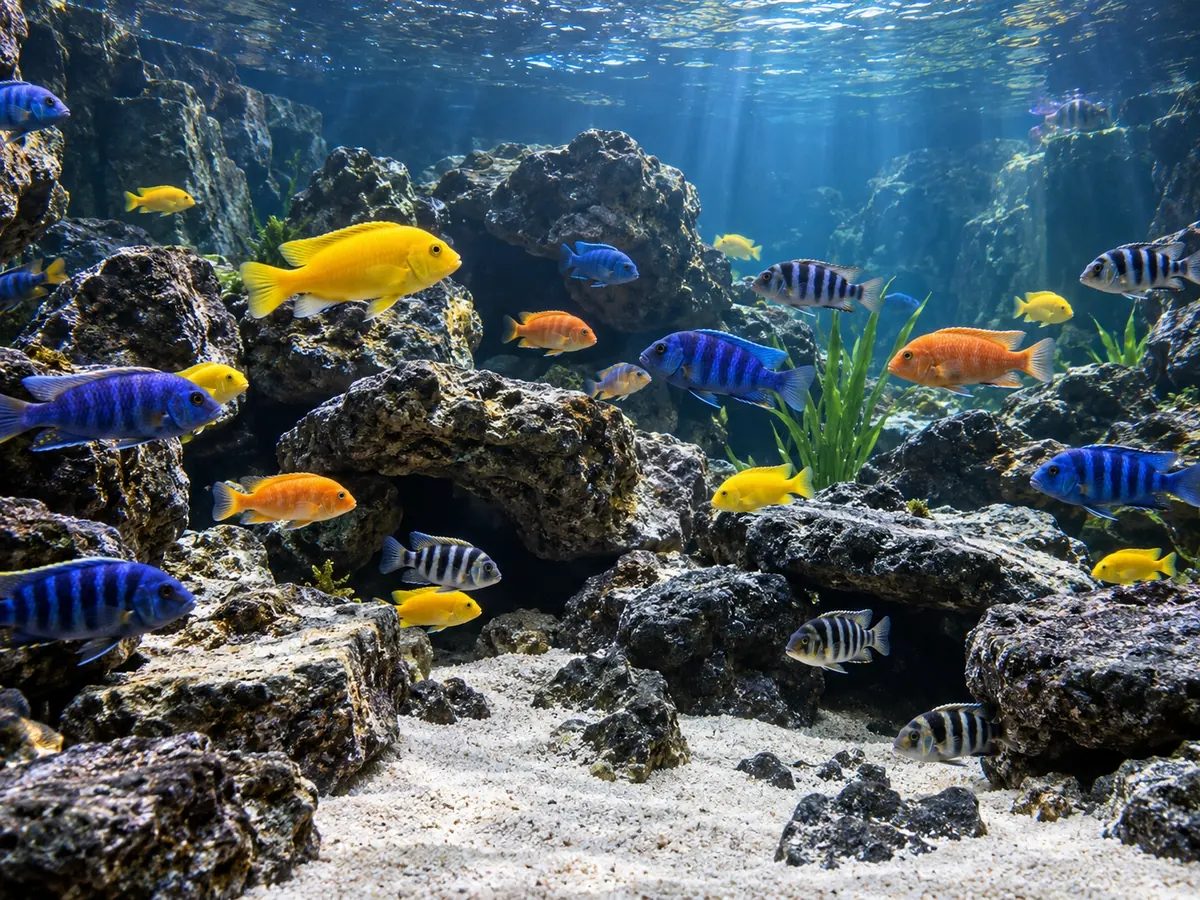
A well-matched African cichlid tank is pure color and movement. A badly matched one is a war: hiding fish, torn fins and sometimes losses. The good news is that the rules for mixing them are few and clear. Here they are, with examples from our catalog.
Rule 1: mbuna with mbuna, peacocks with peacocks
Mbuna (such as the Red Zebra, the Electric Yellow, the Chipokae or the Auratus) are active, territorial and eat mostly plant matter. Peacocks (Aulonocara, such as the Benga peacock) are calmer, swim in open water and eat more protein.
Mixing them is possible but has two problems: mbuna harass peacocks and beat them to the food, and the protein-rich diet peacocks need does not agree with mbuna. If you are starting out, build a tank around one group. We explain the differences in mbuna and peacocks.
Rule 2: different colors and patterns
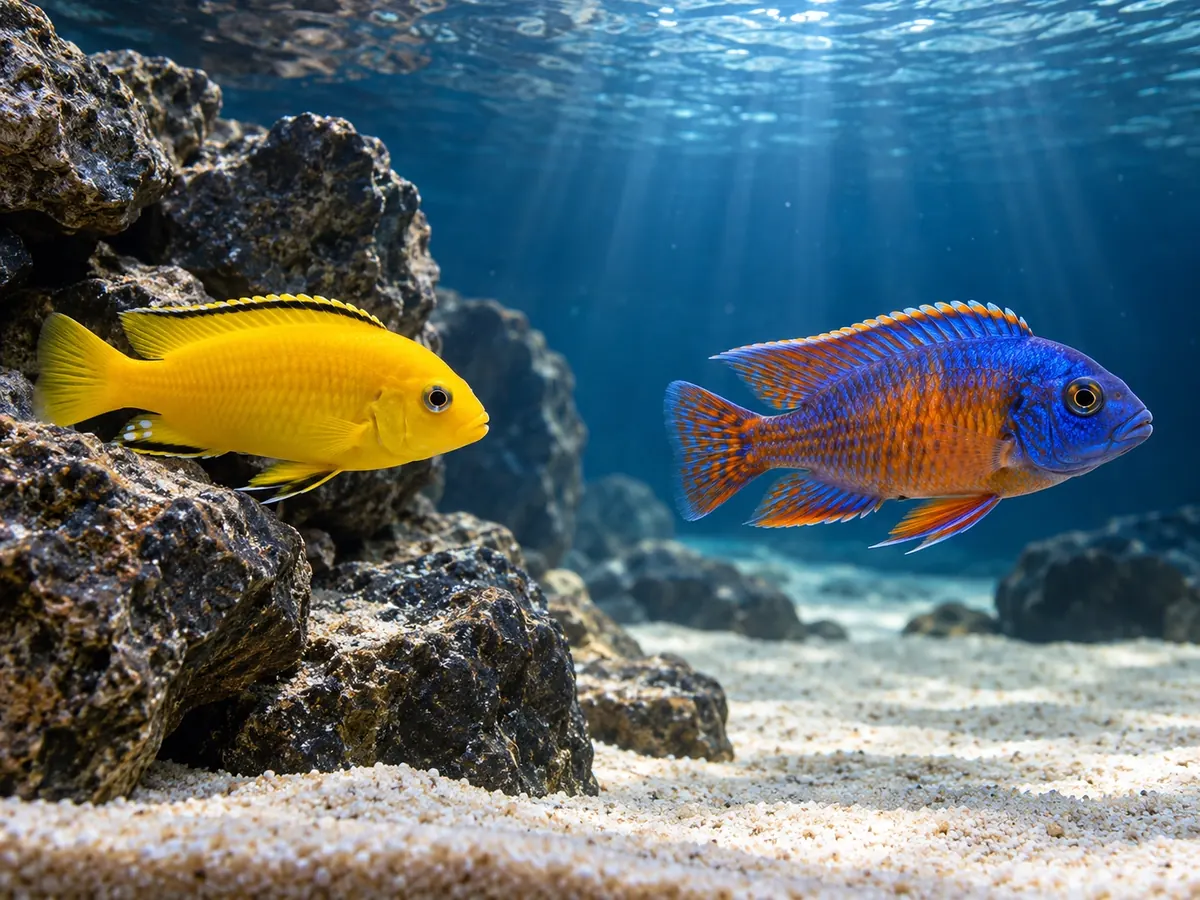
Males recognize rivals by color and pattern. Put two look-alike species together and the males treat each other as competition and fight constantly. Species with very different colors largely ignore each other. A good mbuna tank combines, for example, a yellow, an orange and a striped blue.
Rule 3: do not mix close relatives from the same genus
Besides fighting more, closely related species can crossbreed and produce hybrids. Example: the Auratus and the Chipokae are both Melanochromis, with similar stripes and a strong temperament. Together they clash a lot and can hybridize. Choose one.
Rule 4: the ratio matters
- One male for every 3 or 4 females of each species, so the male spreads his attention.
- Several species with few males work better than many males of one species.
- A well-stocked tank spreads out aggression, as long as filtration and water changes keep up. The numbers are in tank size and stocking.
Our species: how to combine them
| If you have… | Goes well with | Avoid |
|---|---|---|
| Red Zebra | Electric Yellow, Auratus or Chipokae (one of the two) | Other orange Maylandia, peacocks |
| Electric Yellow | Red Zebra, striped blue mbuna | Very aggressive mbuna in small tanks |
| Auratus | Red Zebra, Electric Yellow in a large tank | Chipokae, peacocks |
| Chipokae | Red Zebra, Electric Yellow in a large tank | Auratus, peacocks |
| Benga peacock | Dragon Blood, Golden Dragon and other peacocks | Mbuna |
| Dragon Blood and Golden Dragon | Peacocks in different colors | Mbuna |
What about fish that are not cichlids?
Few fish can handle African cichlids' temperament and hard water. The ones that usually work:
- Synodontis catfish, such as those from the African lakes: hardy, nocturnal and they clean the bottom.
- Bristlenose pleco (Ancistrus): eats algae, hides among rocks and tolerates hard water.
What does not work: tetras, guppies, community mollies, angelfish, discus or goldfish. They need different water and would end up harassed.
Adding fish without fights
- Always quarantine new fish before moving them to the main tank.
- Add them in groups, not one at a time.
- When adding a new group, rearrange the rocks: everyone loses their territory and starts fresh.
- Add the calmer species first and the most aggressive ones last.
- Turn the light off for a few hours after releasing them to lower stress.
Summary
Pick one group (mbuna or peacocks), combine different colors, avoid look-alike species from the same genus and mind the male-to-female ratio. If you are unsure about a combination, ask in the forum or write to us before buying.
Discuss it in the forumMy aquarium
More from the blog
 November 2, 2026
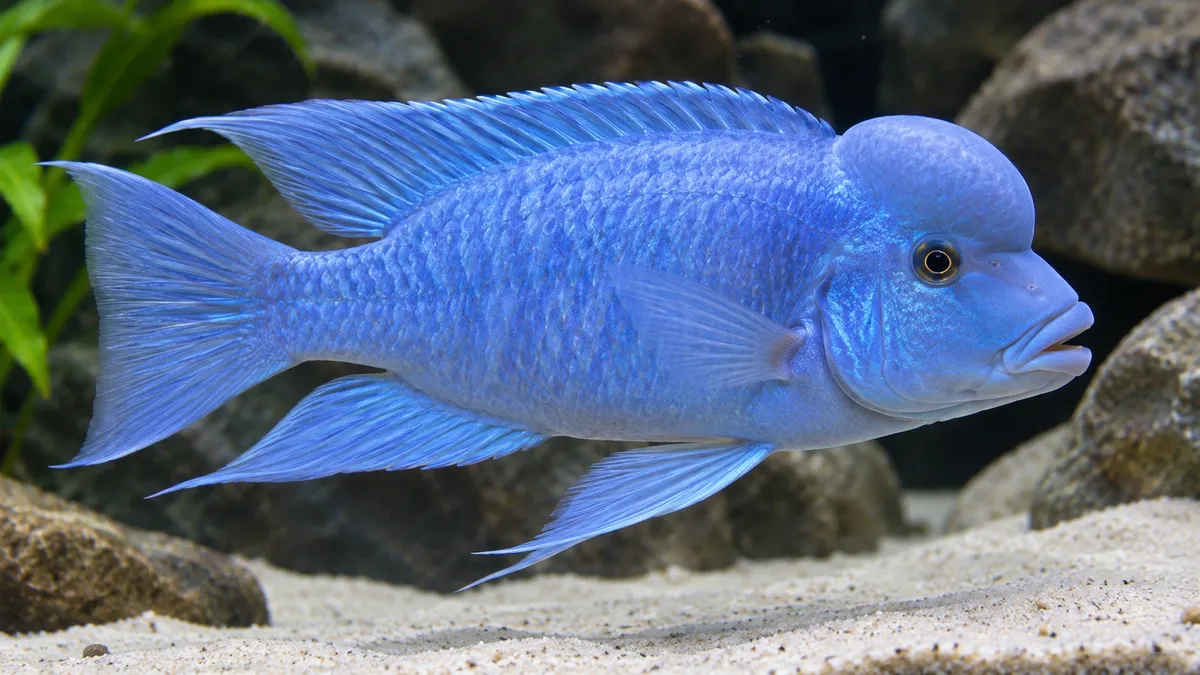
Blue Dolphin (Cyrtocara moorii): care, hump and calm temperament
Lake Malawi's humped blue cichlid: how big it gets, what tank and food it needs, how to sex it and why it is one of the most peaceful large cichlids.
Read →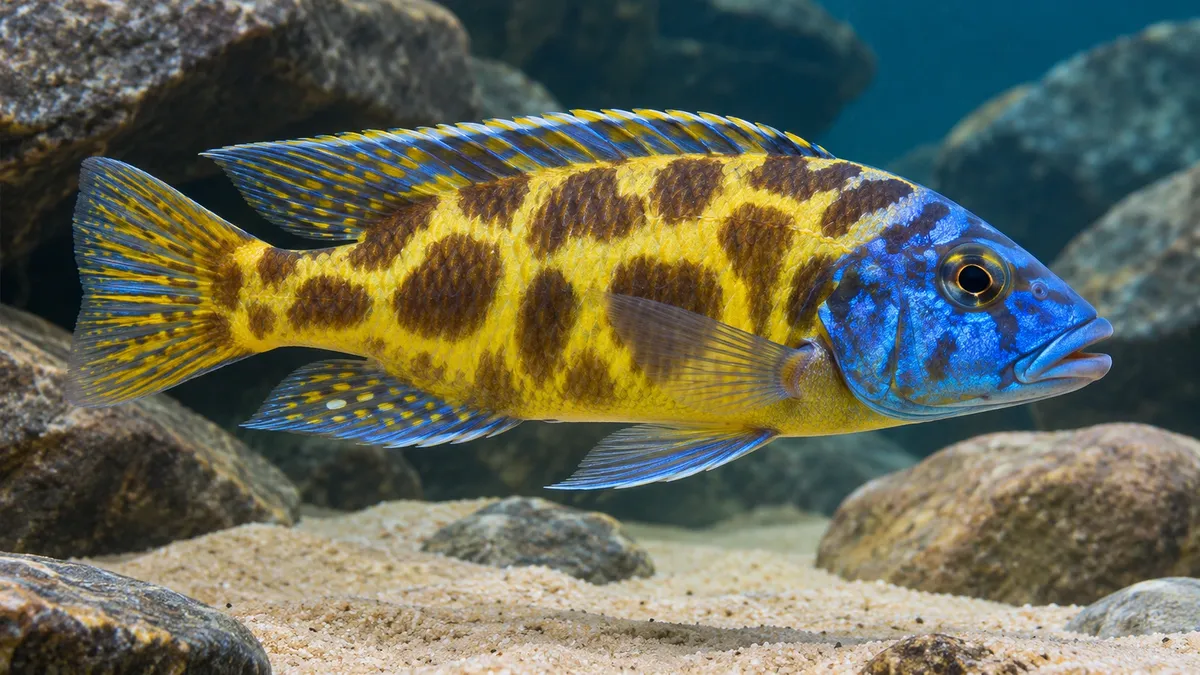 November 2, 2026
Venustus (Nimbochromis venustus): care, size and tank mates
Lake Malawi's giraffe cichlid: how big it gets, what tank it needs, what it eats, how to tell male from female and which fish can live with it without being eaten.
Read →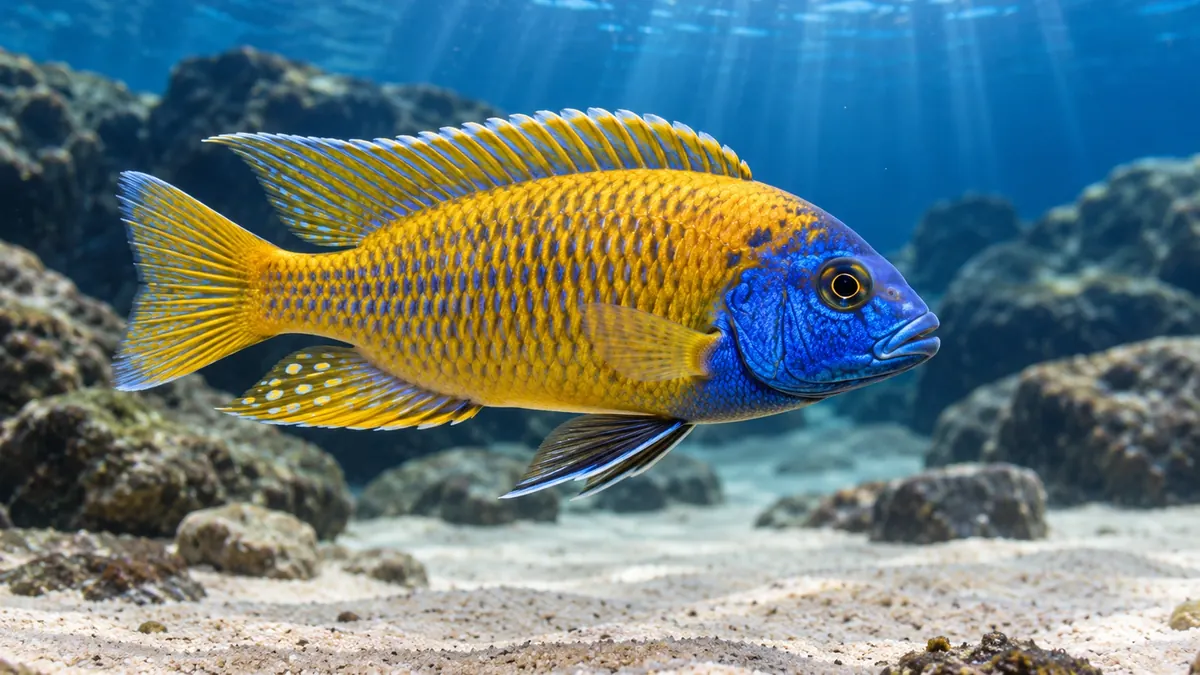 November 1, 2026
Benga peacock (Aulonocara baenschi): care, colors and tank mates
The yellow peacock with a blue face: size, tank, diet, male and female differences, and how to build a calm peacock tank.
Read →