
October 30, 2026
Auratus (Melanochromis auratus): care, temperament and tank mates
What the Auratus is like, why the male changes color, the tank it needs, how to feed it and which African cichlids it lives with peacefully.
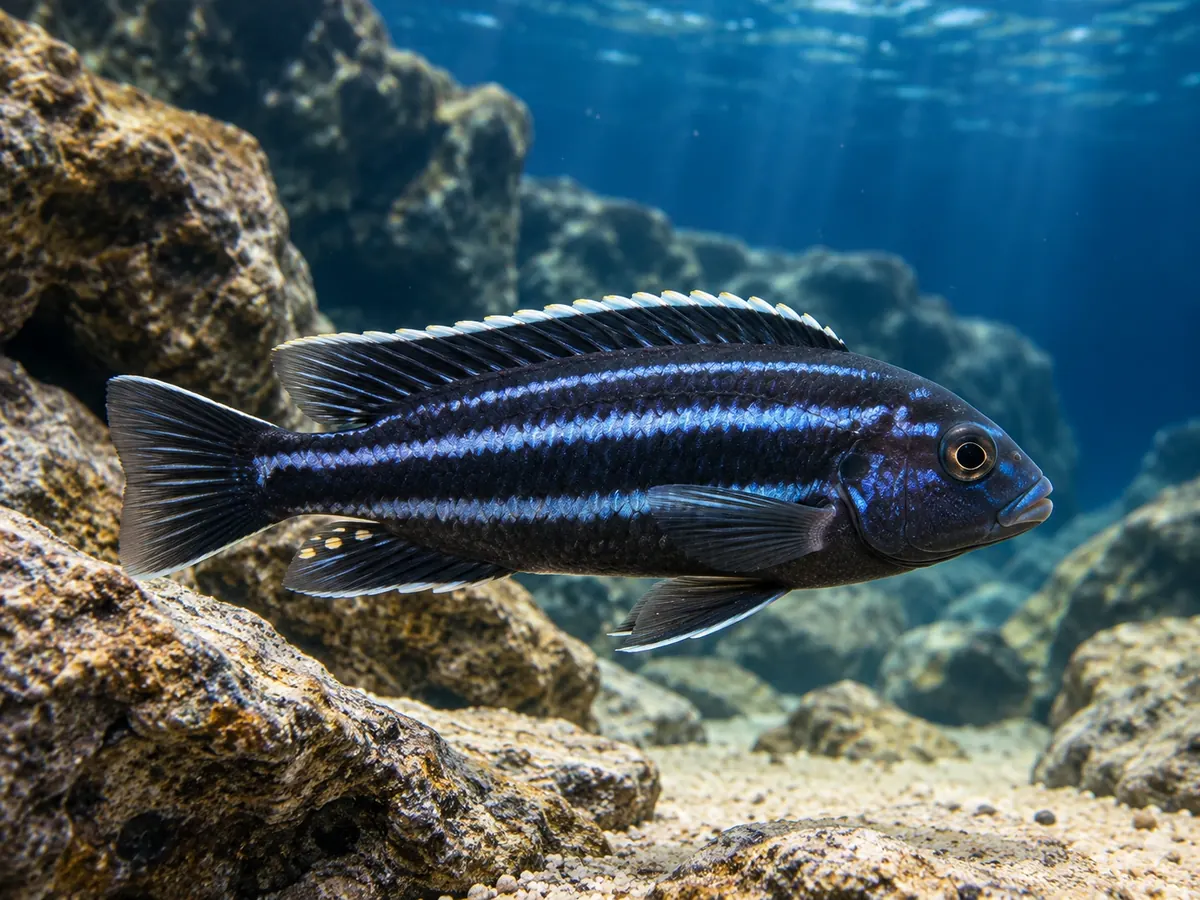
The Auratus (Melanochromis auratus) is one of the most recognizable African cichlids and one of the first to reach aquariums around the world. It is golden with black stripes when young, transforms as an adult, and has a strong temperament worth knowing before you buy. Here is the full guide.
A fish that changes color
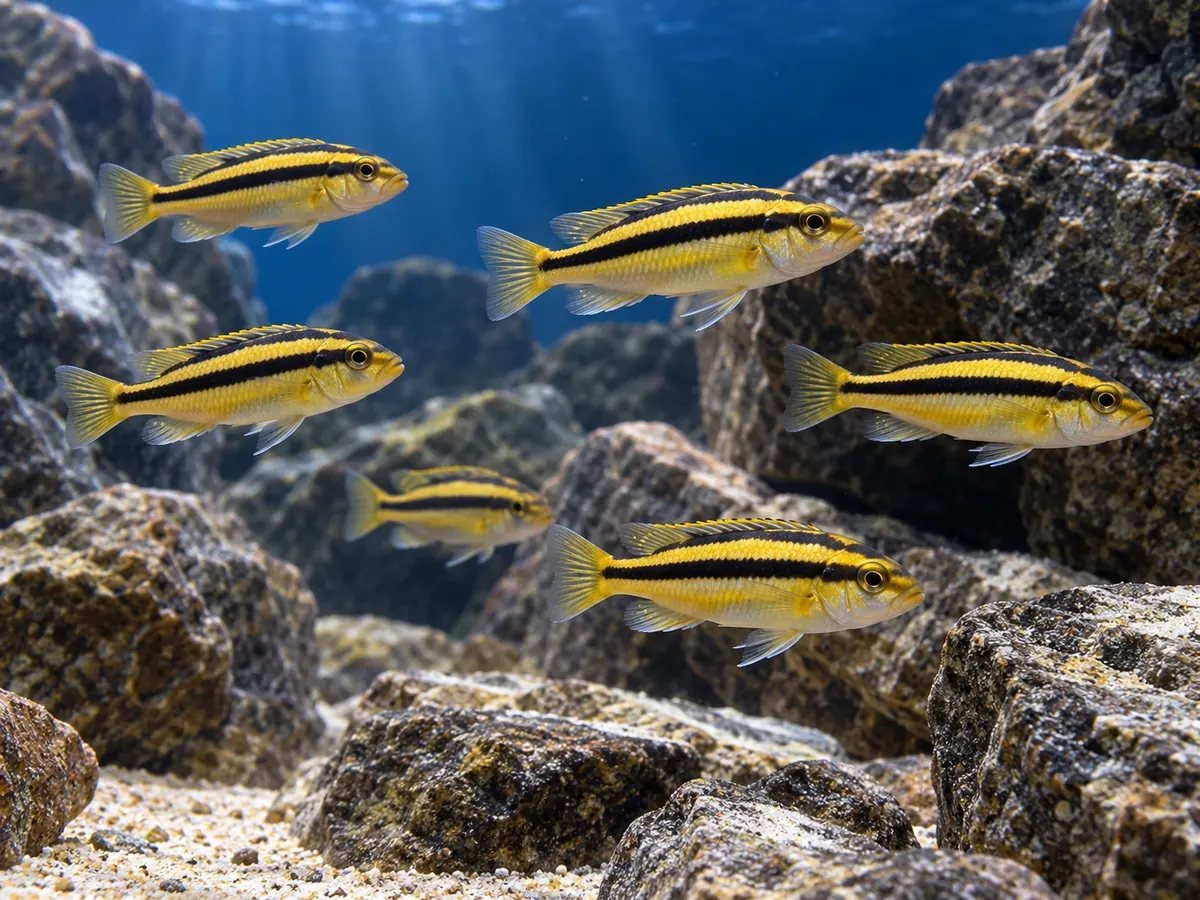
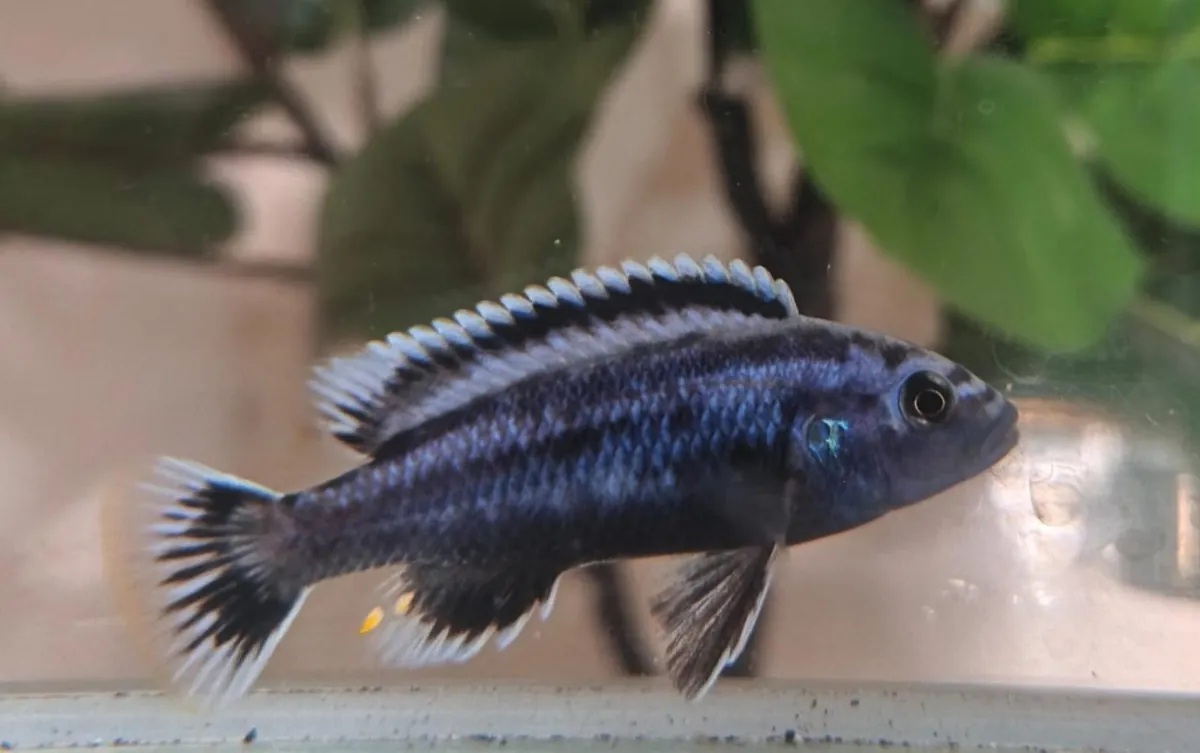
The most curious thing about the Auratus is its pattern change. Juveniles and females are golden with two black stripes along the body. As the male matures, he reverses the colors: he turns dark blue, almost black, with light stripes and a white or pale blue edge on the dorsal fin. The change takes several months and is one reason to buy them young.
Quick facts
| Scientific name | Melanochromis auratus |
|---|---|
| Group | Mbuna, Lake Malawi |
| Adult size | About 11 cm for males, slightly less for females |
| Temperament | Very territorial, among the most aggressive mbuna |
| Minimum tank | 200 liters, 100 cm long or more |
| Water | pH 7.8 to 8.6, hard; 24 to 27 °C |
| Diet | Mostly plant-based: spirulina and algae |
| Breeding | Maternal mouthbrooder |
Temperament: what to know
The Auratus is beautiful but not a calm fish. Males defend their territory with lots of energy, and females can be aggressive with each other too. To make it work:
- Keep a single male with 3 to 5 females. Two males in one tank almost always ends badly, except in very large tanks.
- Fill the tank with rocks and caves so females have places to hide.
- Keep the tank well stocked with other mbuna: aggression gets spread out.
- If one fish is being harassed nonstop, separate it before it gets hurt.
Feeding
In the lake, the Auratus grazes the algae and tiny organisms that grow on rocks. In the tank, the staple should be a spirulina-based or vegetable food, as flakes or small pellets. Animal protein such as brine shrimp or larvae only now and then: too much protein can cause "bloat", a serious digestive problem in mbuna. Feed small amounts once or twice a day. More in feeding mbuna and peacocks.
Tank mates
It does best with other robust mbuna in different colors that can hold their own:
- Good: the Red Zebra, tough and a very different orange. The Electric Yellow also works in large, well-decorated tanks, though it is calmer.
- Avoid: other Melanochromis such as the Chipokae. Their patterns are similar, they clash a lot and they can crossbreed.
- Avoid: peacocks and peaceful fish. The Auratus harasses them and wins every meal.
- Never with community tropical fish such as tetras, guppies or angelfish.
To build a full group, see compatible African cichlids for more combinations.
Breeding
Like many mbuna, the female carries the eggs in her mouth for about three weeks without eating, then releases fully formed fry. In a rocky tank with good food they breed readily. If you want to breed them, see our guide to responsible breeding.
Auratus available
We have juvenile Auratus of about 6 cm, a good age to build a group and watch them color up. Real photos of our fish, price, and pickup or delivery by Uber Flash.
Discuss it in the forumMy aquarium
More from the blog
 November 2, 2026
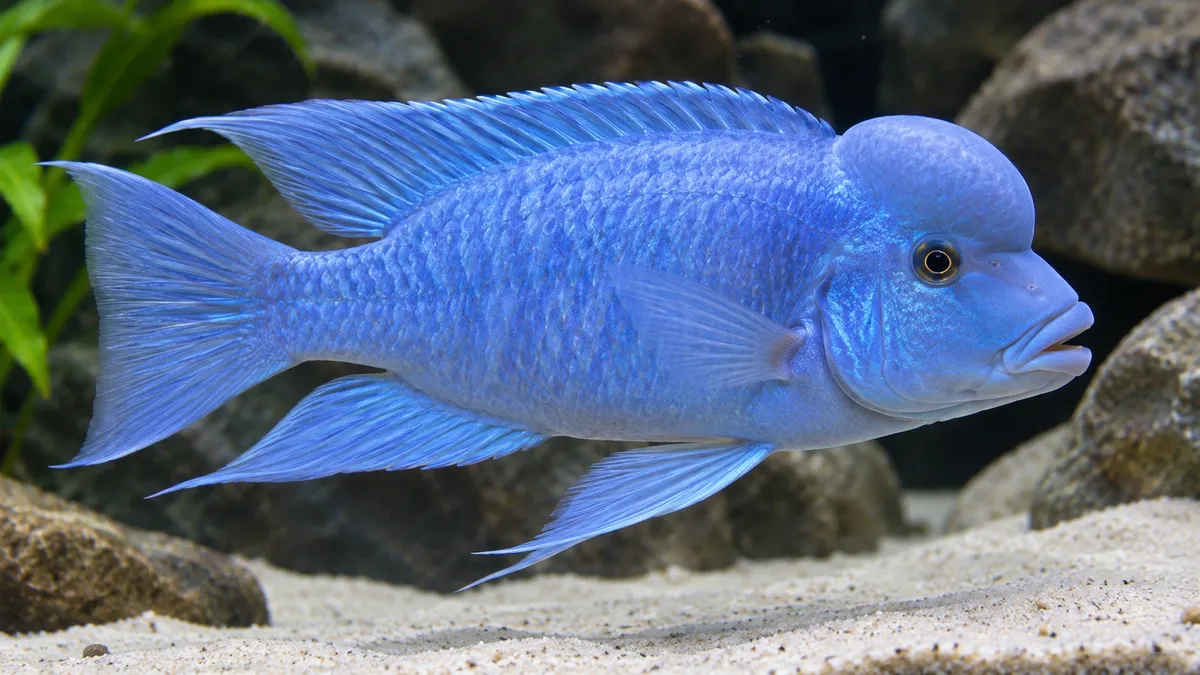
Blue Dolphin (Cyrtocara moorii): care, hump and calm temperament
Lake Malawi's humped blue cichlid: how big it gets, what tank and food it needs, how to sex it and why it is one of the most peaceful large cichlids.
Read → November 2, 2026
Venustus (Nimbochromis venustus): care, size and tank mates
Lake Malawi's giraffe cichlid: how big it gets, what tank it needs, what it eats, how to tell male from female and which fish can live with it without being eaten.
Read → November 1, 2026
Benga peacock (Aulonocara baenschi): care, colors and tank mates
The yellow peacock with a blue face: size, tank, diet, male and female differences, and how to build a calm peacock tank.
Read →