
October 31, 2026
Electric Yellow (Labidochromis caeruleus): care, temperament and tank mates
The calmest mbuna and one of the best for beginners: size, tank, water, diet, how to tell males from females, and which fish it lives with.
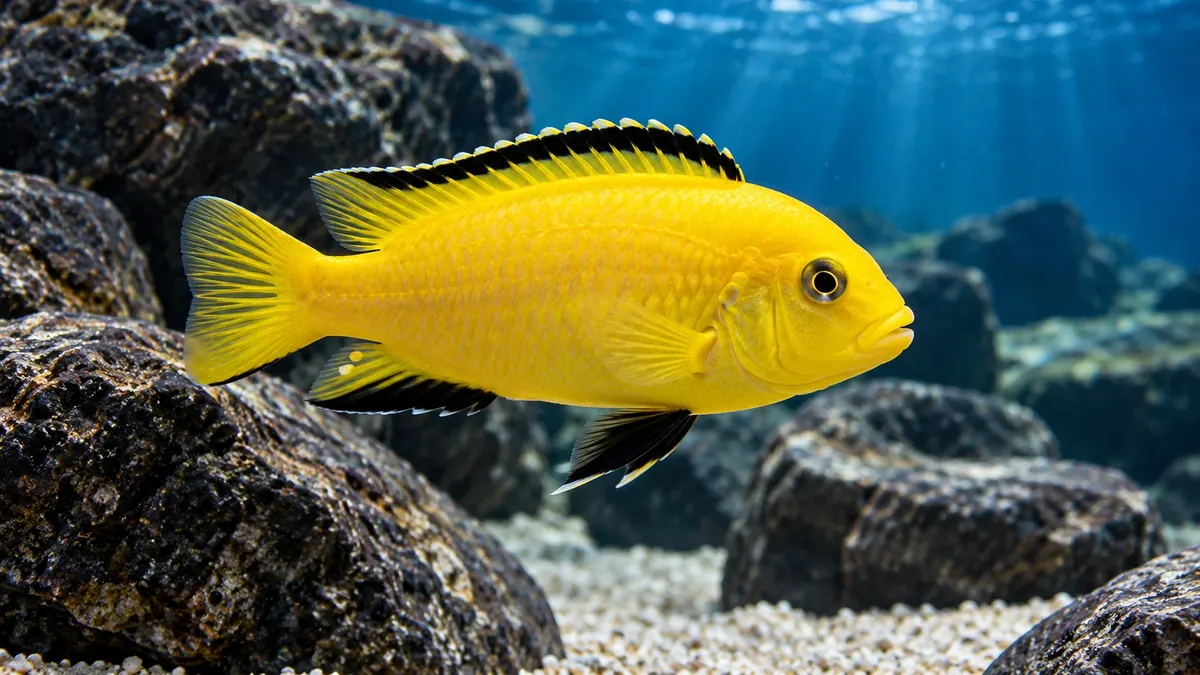
The Electric Yellow (Labidochromis caeruleus), also called the Yellow Lab, is probably the most recommended African cichlid for beginners. Its lemon yellow lights up any tank, it is one of the calmest mbuna, and it adapts well. Here is the complete guide.
Quick facts
| Scientific name | Labidochromis caeruleus |
|---|---|
| Other names | Yellow Lab, yellow Labidochromis |
| Group | Mbuna, Lake Malawi |
| Adult size | About 10 cm |
| Temperament | One of the most peaceful mbuna |
| Minimum tank | 150 to 200 liters, 90 to 100 cm long |
| Water | pH 7.8 to 8.6, hard; 24 to 27 °C |
| Diet | Omnivore: plant-based staple with some protein |
| Breeding | Maternal mouthbrooder |
A yellow that never fades
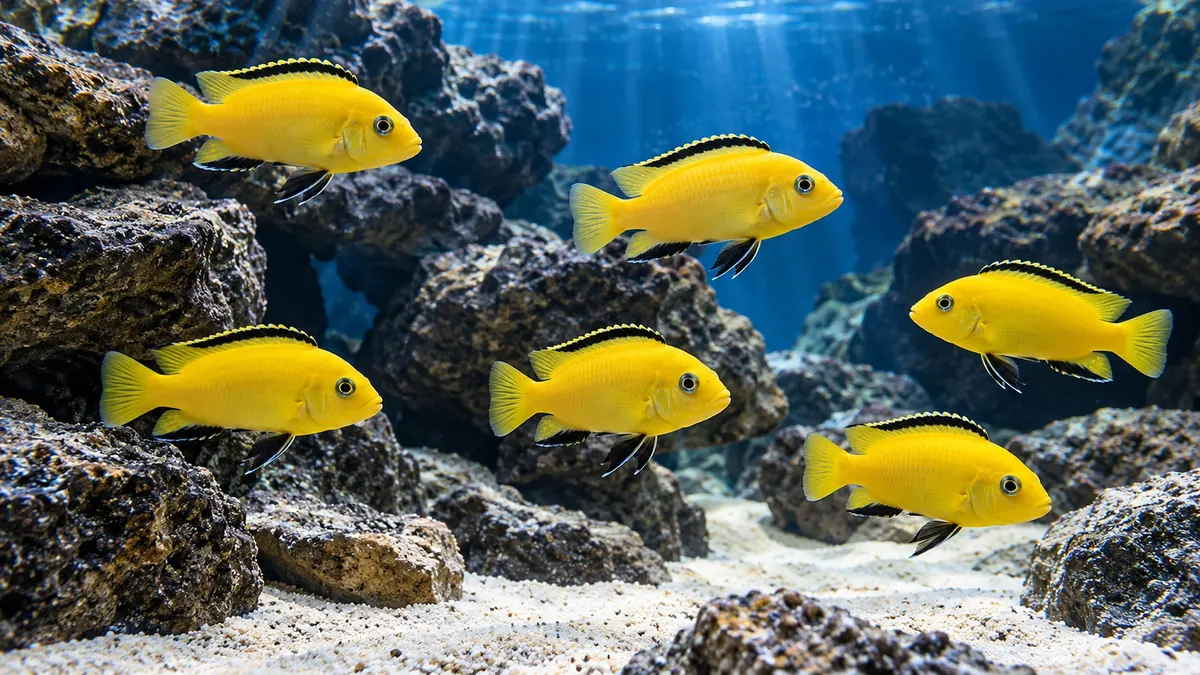
Unlike many mbuna, in the Electric Yellow males and females are both yellow, so the whole group is colorful, not just the males. The contrast comes from the black stripes on the dorsal fin and, in males, black pelvic and anal fins.
Temperament: the mbuna to start with
In the lake, the Electric Yellow does not defend territories as large as other mbuna. In the tank that means a much calmer fish: it rarely chases others to the point of injury. That makes it ideal as a first African cichlid and one of the few mbuna that can live with peacocks in large tanks.
It is still a mbuna: males compete with each other, so keep one male for every 3 or 4 females, or several males only in large tanks with plenty of rocks.
Tank and water
- From 150 to 200 liters for a group, more if you combine it with other species.
- Rocks with caves and light sand, which also makes the yellow pop.
- Hard, alkaline water with a pH of 7.8 to 8.6 at 24 to 27 °C. If your water is soft, see Costa Rica tap water.
- A good filter and weekly 20 to 30% water changes. Details in tank size and stocking.
Diet
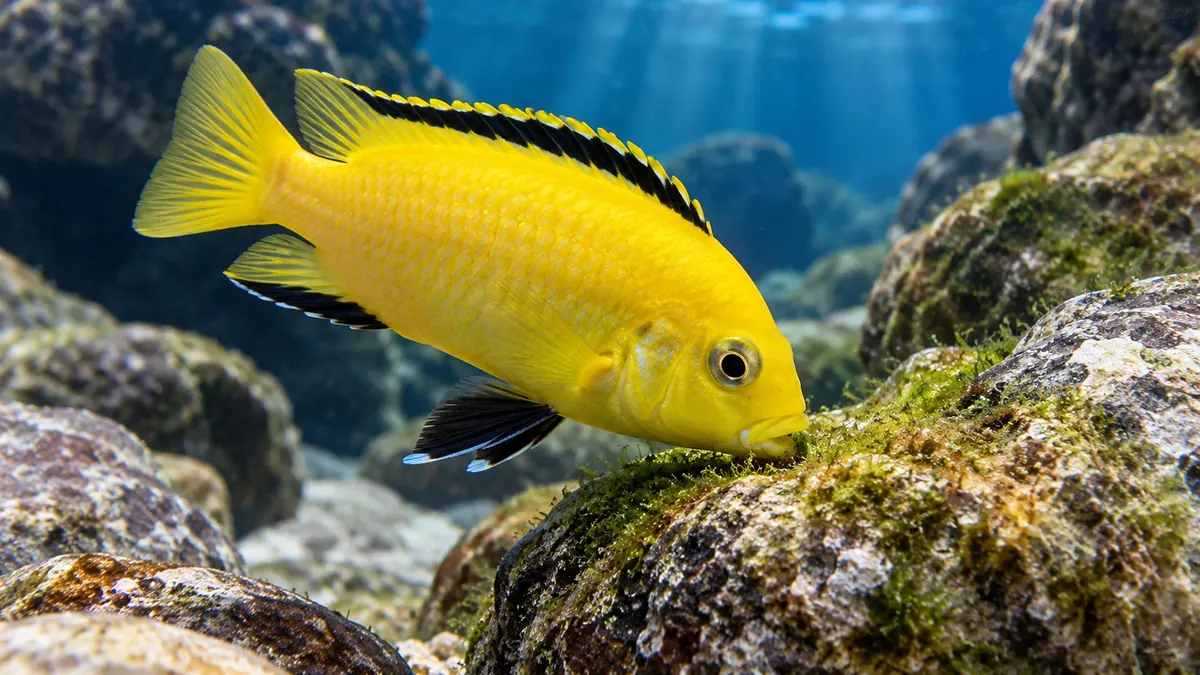
In the wild it eats more invertebrates than most mbuna, picking insect larvae and small snails from the rocks. In the tank, still use a spirulina-based food as the staple and add some protein a few times a week, such as brine shrimp or a quality pellet. Small amounts, once or twice a day: like all mbuna, it can get Malawi bloat if overfed.
Telling males from females
Since both sexes are yellow, color does not help. Look at:
- Pelvic and anal fins deep black in males; lighter or yellowish in females.
- Size: males are usually larger.
- Egg spots more pronounced on the male's anal fin.
- Behavior: the male courting and guarding a rock.
The full explanation is in how to tell if a cichlid is male or female.
Tank mates
- Good: mbuna in different colors and not too aggressive, such as the Red Zebra or striped blue mbuna. In large tanks, peacocks such as the Benga peacock too.
- With care: very aggressive mbuna such as the Auratus or the Chipokae, only in large, well-decorated tanks, since the Electric Yellow is calmer.
- Avoid: other yellow Labidochromis (they can crossbreed) and community tropical fish.
More combinations in compatible African cichlids.
Breeding
It breeds readily in the aquarium. The female holds the eggs in her mouth for about three weeks and releases 10 to 25 fry, yellow from a young age. The whole process is in how to breed African cichlids.
Electric Yellow in Costa Rica
See the Electric Yellow profile in our catalog for availability and price, or message us on WhatsApp from there. If you are setting up your first tank, start with the beginner's guide.
Discuss it in the forumMy aquarium
More from the blog
 November 2, 2026
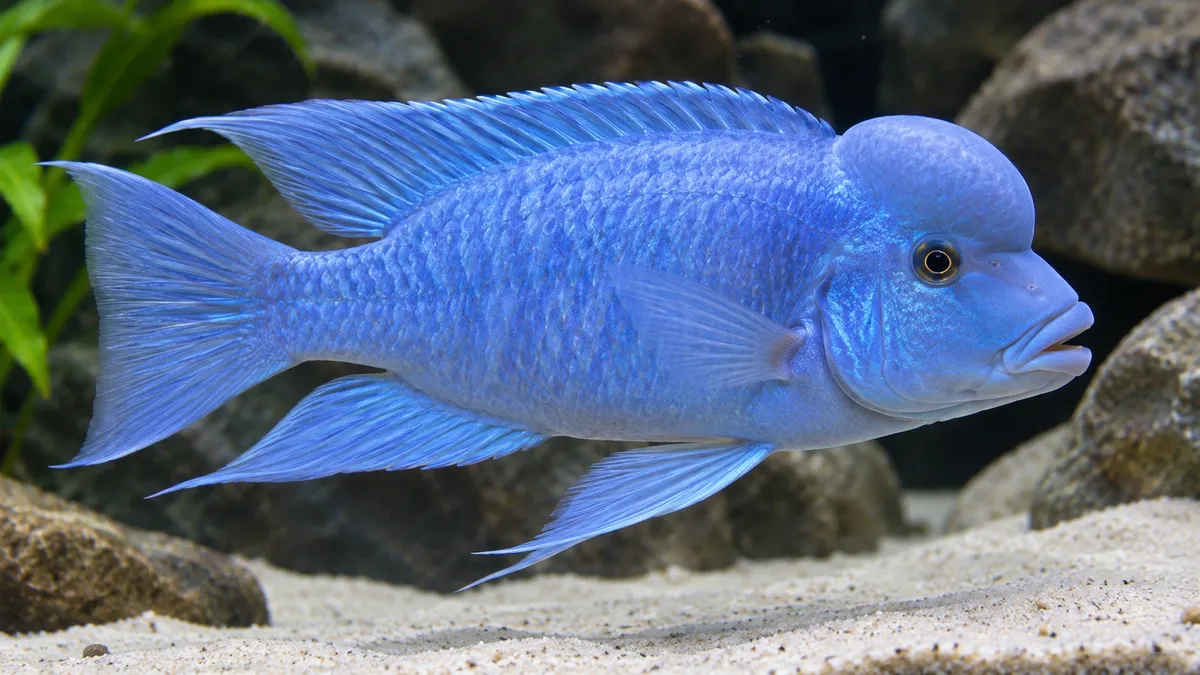
Blue Dolphin (Cyrtocara moorii): care, hump and calm temperament
Lake Malawi's humped blue cichlid: how big it gets, what tank and food it needs, how to sex it and why it is one of the most peaceful large cichlids.
Read →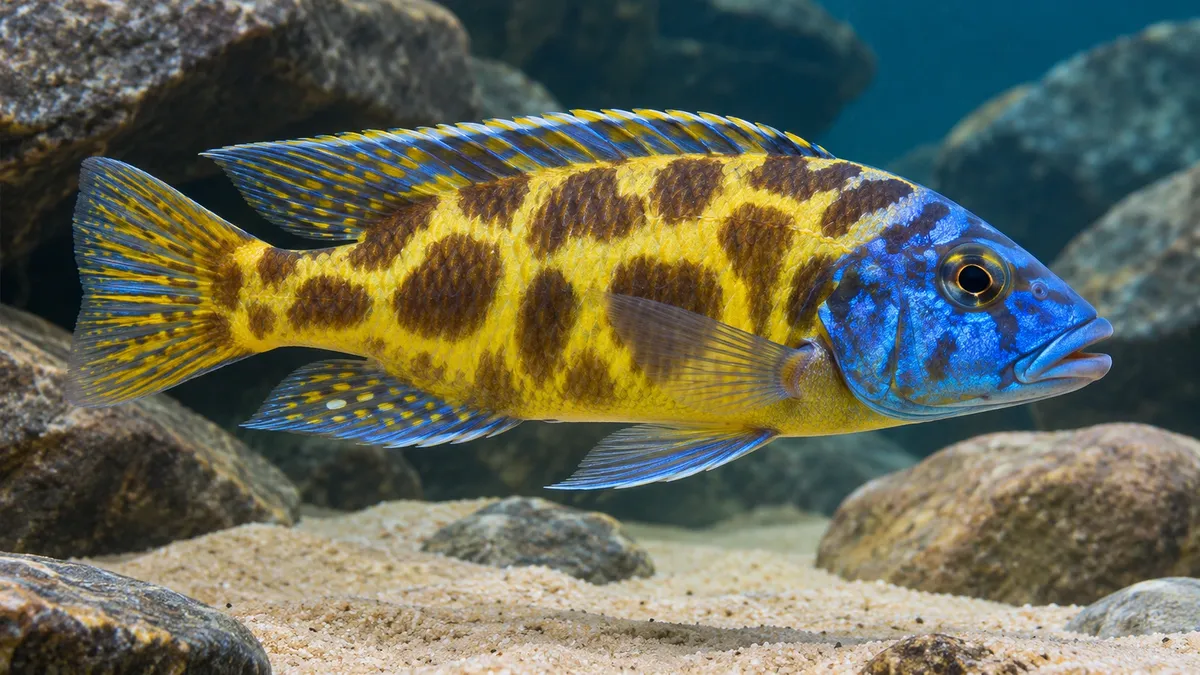 November 2, 2026
Venustus (Nimbochromis venustus): care, size and tank mates
Lake Malawi's giraffe cichlid: how big it gets, what tank it needs, what it eats, how to tell male from female and which fish can live with it without being eaten.
Read →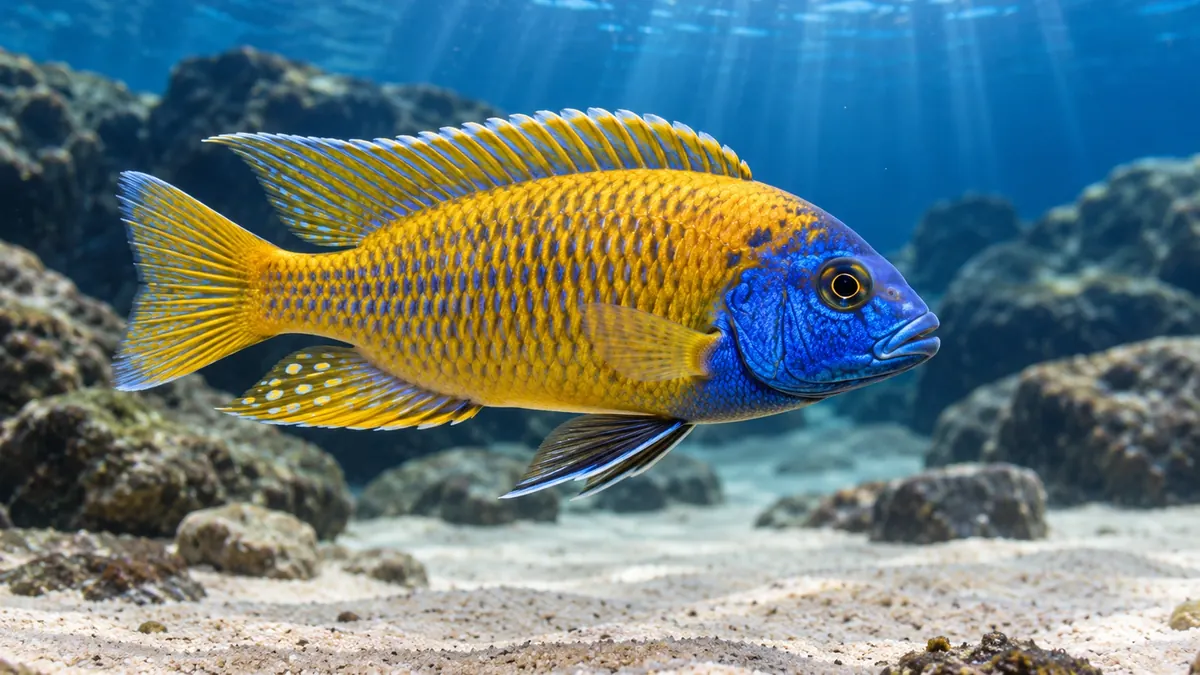 November 1, 2026
Benga peacock (Aulonocara baenschi): care, colors and tank mates
The yellow peacock with a blue face: size, tank, diet, male and female differences, and how to build a calm peacock tank.
Read →