
October 31, 2026
Red Zebra (Maylandia estherae): care, colors and temperament
The most popular orange mbuna: its color variants (orange, pink and OB), how to tell males from females, tank, diet and which fish to combine it with.
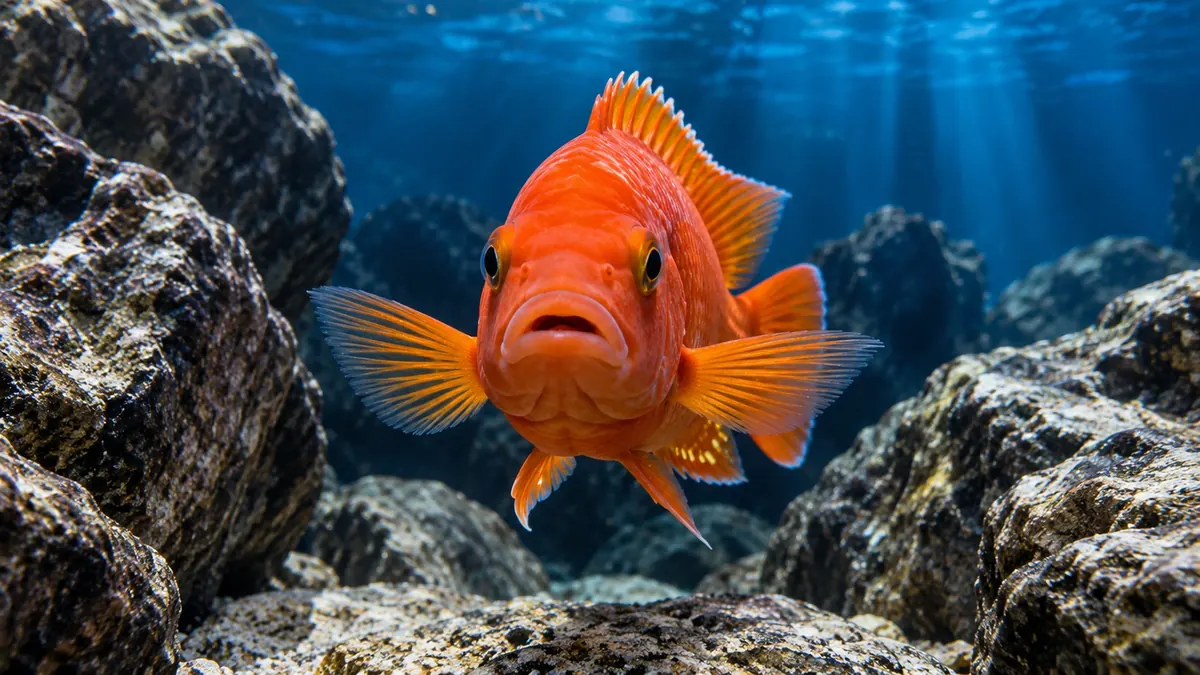
The Red Zebra (Maylandia estherae, formerly Pseudotropheus estherae or Metriaclima estherae) is one of the most popular mbuna. Its intense orange contrasts with the blues and yellows of other Malawi cichlids, and its strong personality makes it great to watch. Here is the complete guide.
Quick facts
| Scientific name | Maylandia estherae |
|---|---|
| Group | Mbuna, Lake Malawi |
| Adult size | 10 to 12 cm |
| Temperament | Territorial, moderately aggressive |
| Minimum tank | 200 liters, 100 cm long or more |
| Water | pH 7.8 to 8.6, hard; 24 to 27 °C |
| Diet | Herbivore: spirulina and algae |
| Breeding | Maternal mouthbrooder |
Colors: orange, pink and OB
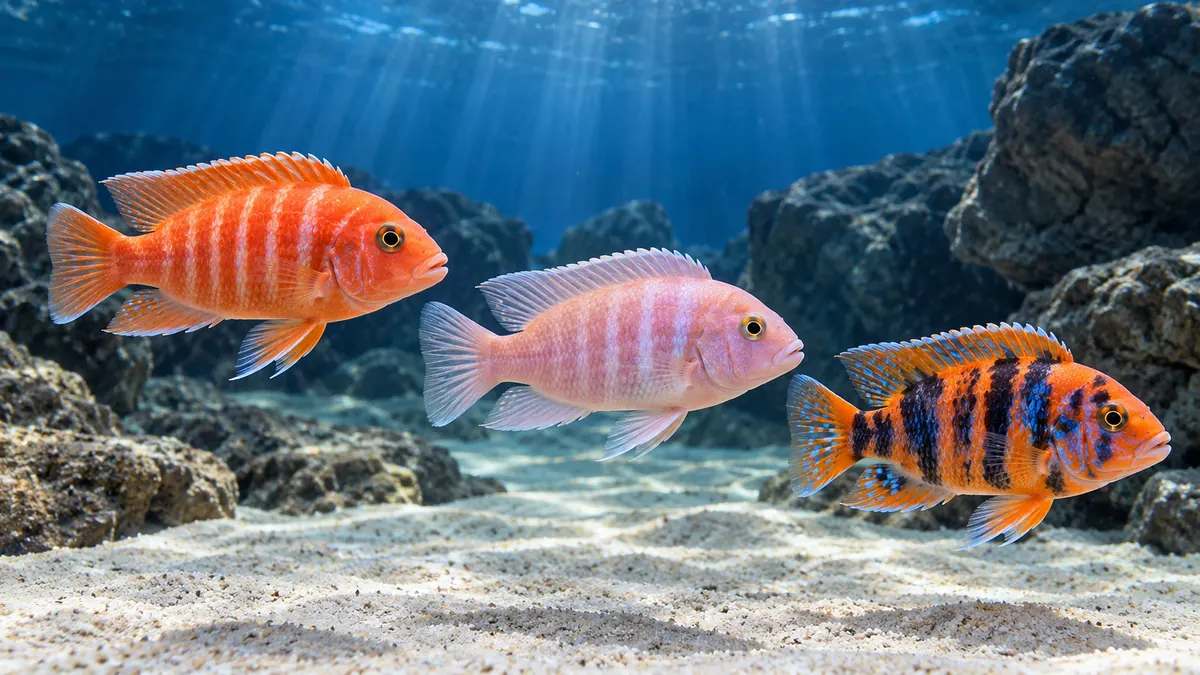
The name "Red Zebra" is misleading: it is neither red nor striped like a zebra. In the wild, males are usually sky blue and females orange. In the hobby, lines were selected in which males are orange too, and those are the ones most often sold. The most common variants:
- Orange: the classic, a bright, even orange.
- Pink: a pale, almost salmon orange.
- OB (orange blotch): orange with irregular black and blue blotches. Usually seen in females.
Temperament
The Red Zebra is a typical mbuna: territorial with attitude, though not at the level of the Auratus or the Chipokae. Males defend a rock or cave and mark it with fin displays and short chases. To keep it in check:
- One male for every 3 or 4 females.
- Plenty of rocks and caves, so every fish has a refuge.
- A well-stocked tank with other mbuna in different colors, to spread aggression.
Tank and water
It needs a tank of 200 liters or more, with rocks stacked to half the height and coral or aragonite sand. The water should be hard and alkaline, pH 7.8 to 8.6, at 24 to 27 °C. We explain how to get there with tap water in Costa Rica tap water for African cichlids, and how to set up the tank in tank size, rocks and stocking.
Diet
It is a herbivore that scrapes algae off rocks in the lake. The staple should be a spirulina-based food, as flakes or small pellets, once or twice a day in small amounts. Avoid meat and protein-rich foods: they are the main cause of Malawi bloat, which Red Zebras are prone to.
Telling males from females
In aquarium lines where both sexes are orange, look at:
- Egg spots: males have large, well-defined yellow spots on the anal fin.
- Size and fins: males are larger, with a longer, pointed dorsal fin.
- Color: dominant males are usually a deeper orange. OB fish are almost always females.
- Behavior: the male guards a rock and courts the females.
More detail in how to tell males from females.
Tank mates
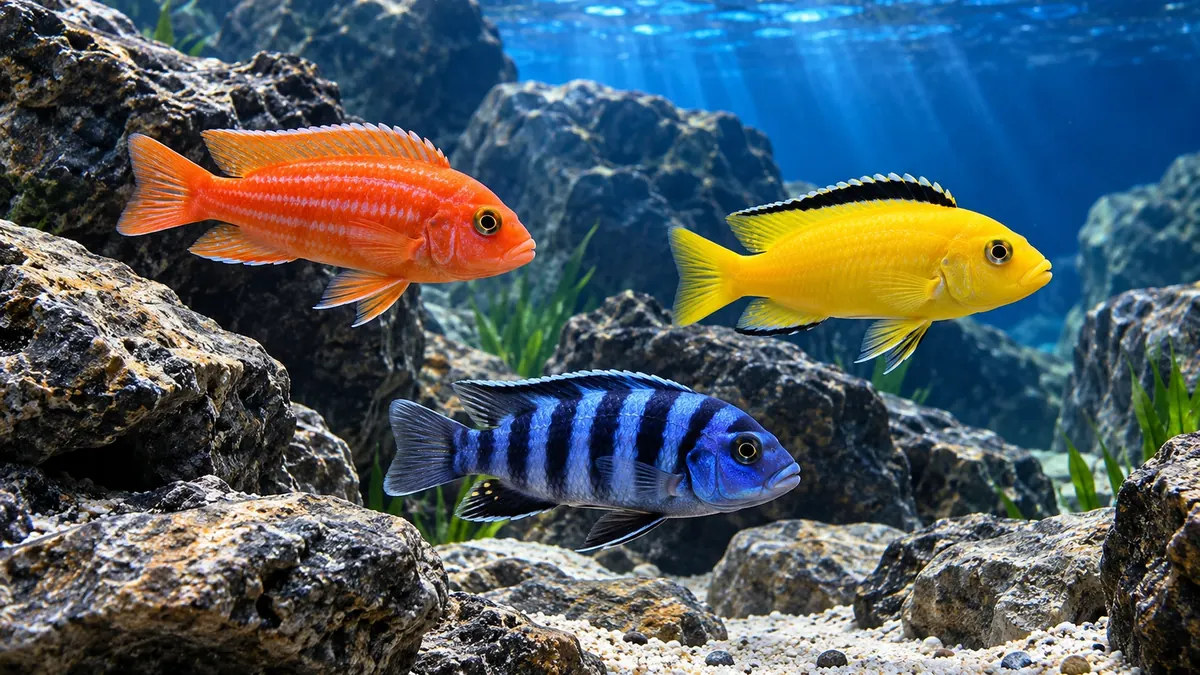
- Good: the Electric Yellow and striped blue mbuna. Different colors mean fewer fights.
- With care: very aggressive mbuna such as the Auratus or Chipokae, only one of them and in a large tank.
- Avoid: other orange or similar Maylandia, since they crossbreed easily, and peacocks.
All the combinations in compatible African cichlids.
Breeding
It is one of the easiest mbuna to breed. The female holds the eggs in her mouth for about three weeks and releases 10 to 30 fry, already orange from a young age. The full process is in how to breed African cichlids.
Red Zebra in Costa Rica
See the Red Zebra profile in our catalog for availability and price, or message us on WhatsApp from there. If you are just starting, the beginner's guide helps you plan the tank.
Discuss it in the forumMy aquarium
More from the blog
 November 2, 2026
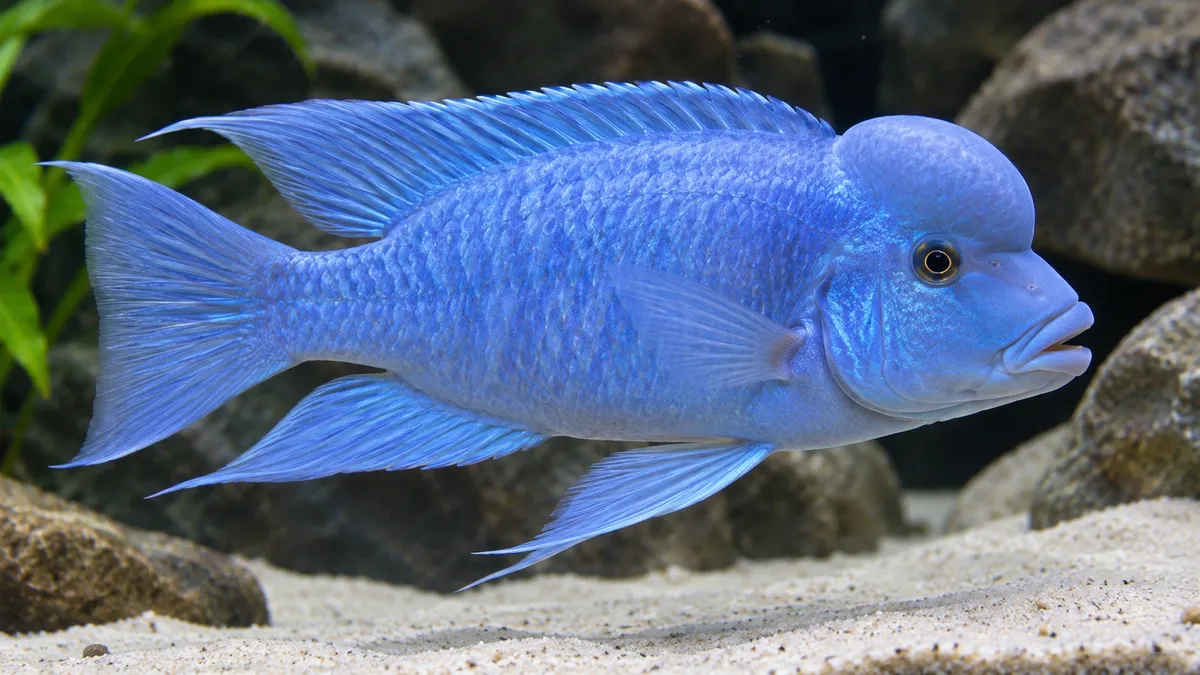
Blue Dolphin (Cyrtocara moorii): care, hump and calm temperament
Lake Malawi's humped blue cichlid: how big it gets, what tank and food it needs, how to sex it and why it is one of the most peaceful large cichlids.
Read →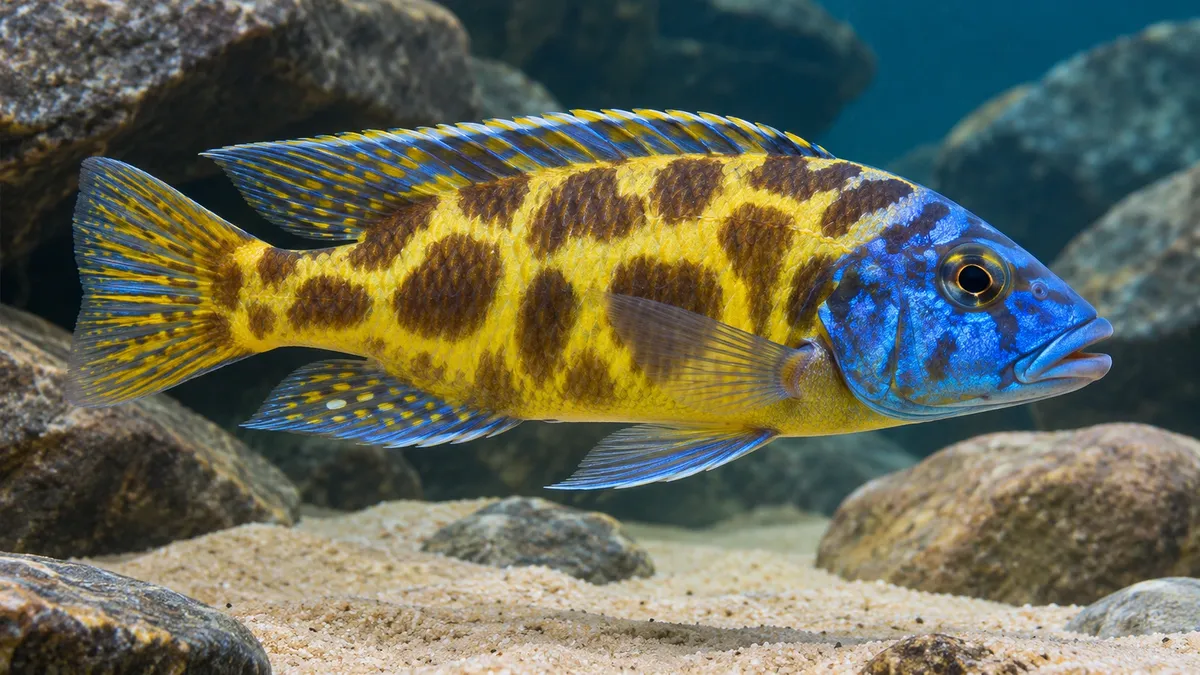 November 2, 2026
Venustus (Nimbochromis venustus): care, size and tank mates
Lake Malawi's giraffe cichlid: how big it gets, what tank it needs, what it eats, how to tell male from female and which fish can live with it without being eaten.
Read →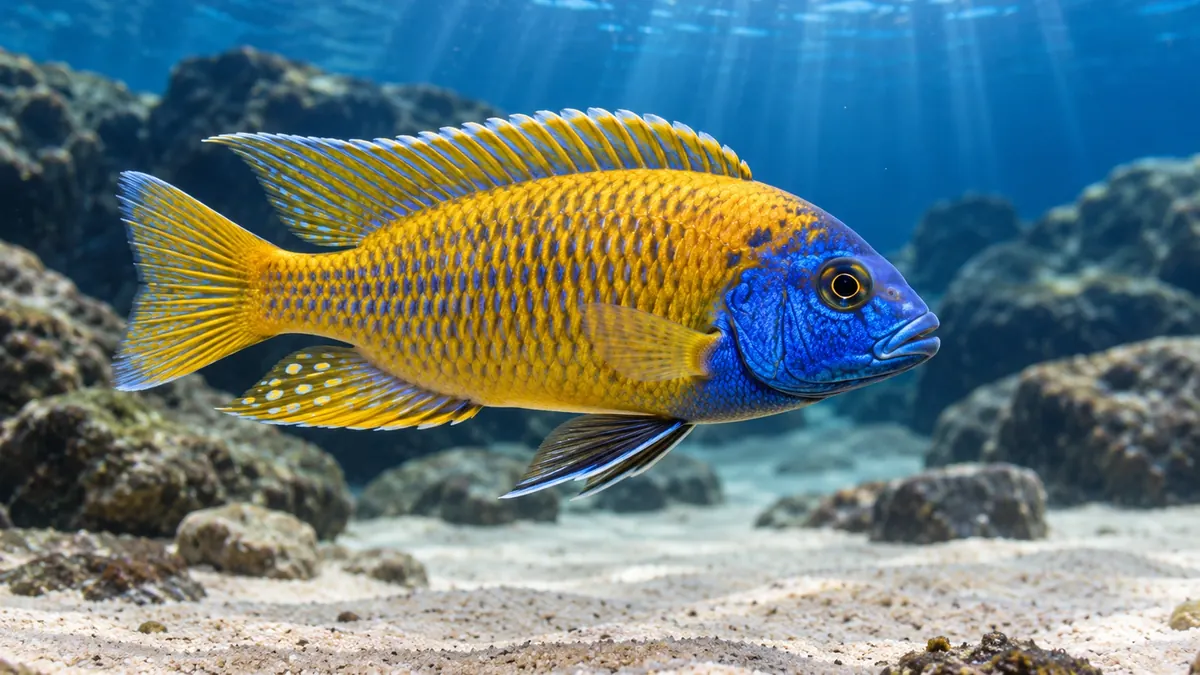 November 1, 2026
Benga peacock (Aulonocara baenschi): care, colors and tank mates
The yellow peacock with a blue face: size, tank, diet, male and female differences, and how to build a calm peacock tank.
Read →